

 Language
 中文简体
中文简体
What Are U-Joints? Function, Types & Replacement
Content
- 1 How U-Joints Work: The Mechanics Explained
- 2 Where U-Joints Are Located in a Vehicle
- 3 Types of U-Joints: Not All Are Created Equal
- 4 Warning Signs of a Failing U-Joint
- 5 U-Joint Replacement: Cost, Difficulty, and When to DIY
- 6 U-Joint vs CV Joint: Understanding the Difference
- 7 How Long Do U-Joints Last and What Affects Their Lifespan
- 8 U-Joints Beyond Automotive: Industrial and Other Applications
U-joints, short for universal joints, are mechanical couplings that connect two rotating shafts at an angle, allowing torque to be transmitted smoothly even when the shafts are not perfectly aligned. In most rear-wheel-drive and four-wheel-drive vehicles, u-joints are the critical link between the transmission, driveshaft, and rear axle — they flex and rotate simultaneously to accommodate suspension movement, vehicle load changes, and driveline angles. Without functioning u-joints, torque from the engine cannot reach the wheels. A worn or failed u-joint is not just an inconvenience; at highway speeds, a catastrophic u-joint failure can cause the driveshaft to drop onto the road or punch through the floor, creating a serious safety hazard.
How U-Joints Work: The Mechanics Explained
A universal joint solves a fundamental engineering problem: how do you transfer rotational power between two shafts that meet at an angle — and where that angle changes constantly as the vehicle moves? A rigid connection would bind and break. A flexible coupling that simply bends would lose torque. The u-joint does both: it flexes and rotates at the same time.
The Components of a Standard U-Joint
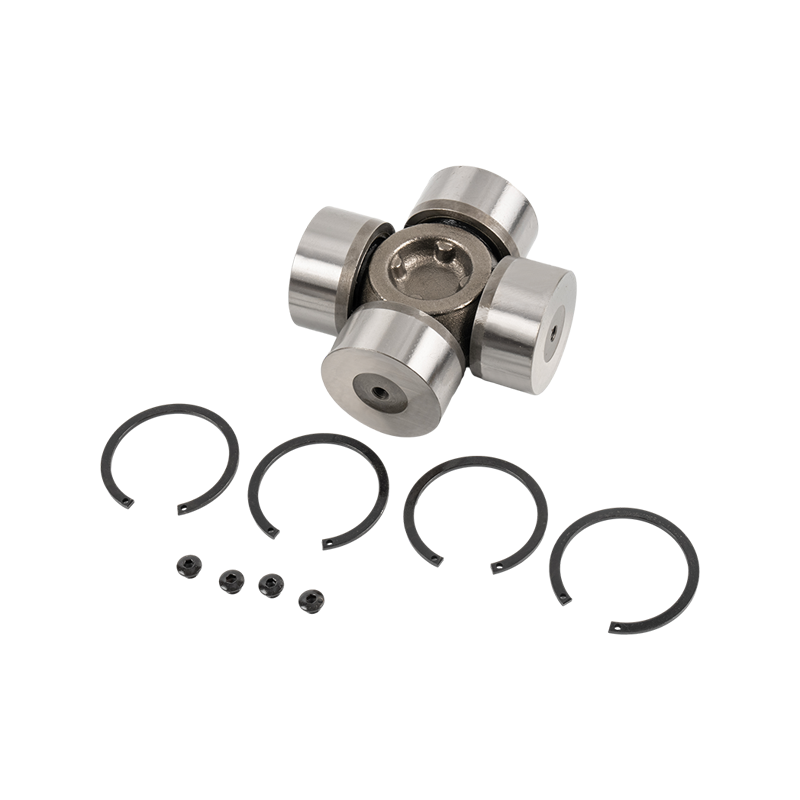
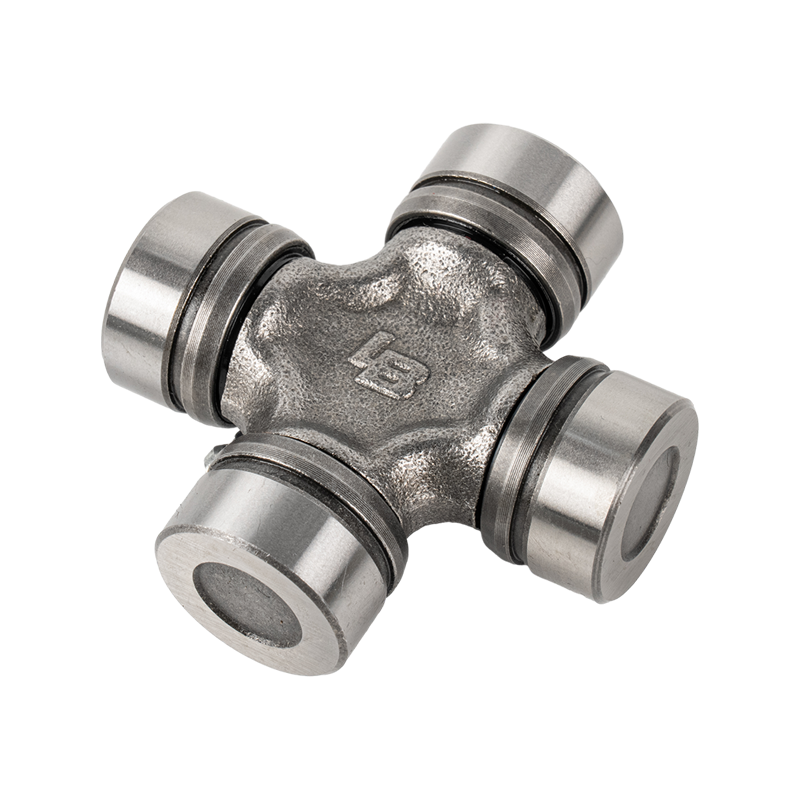
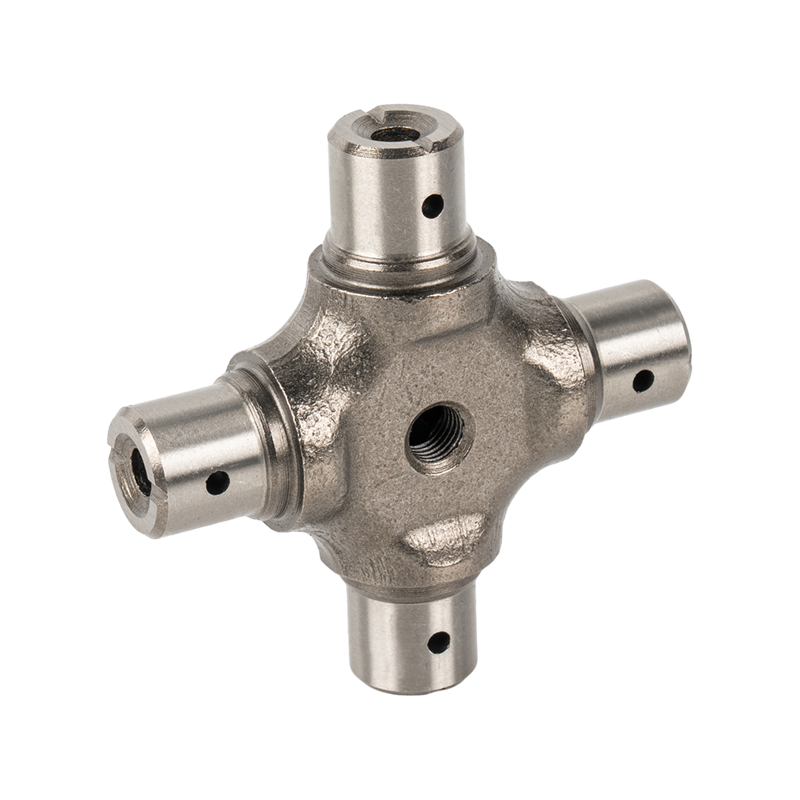
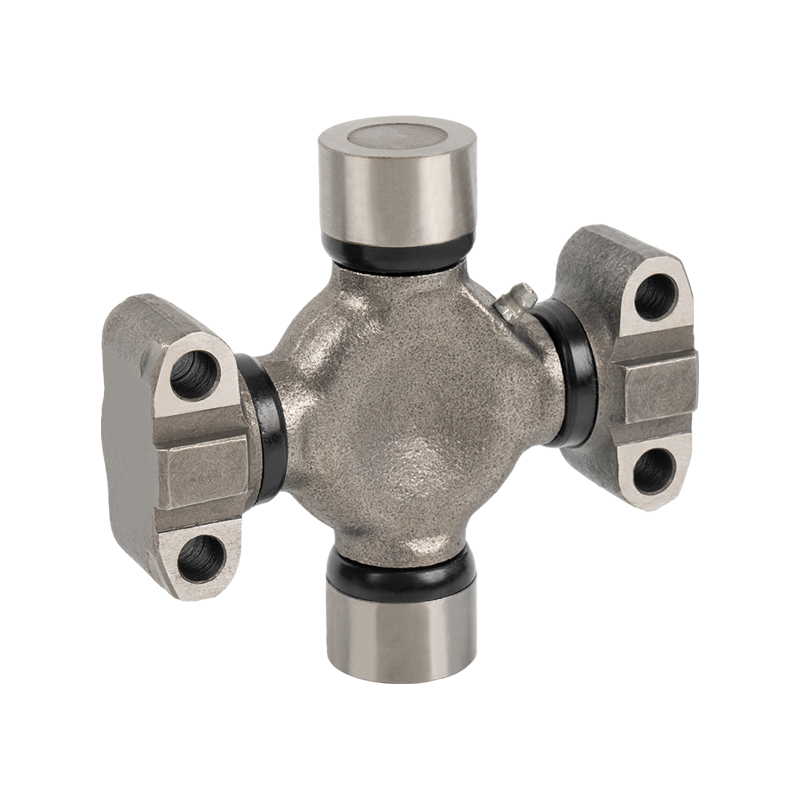
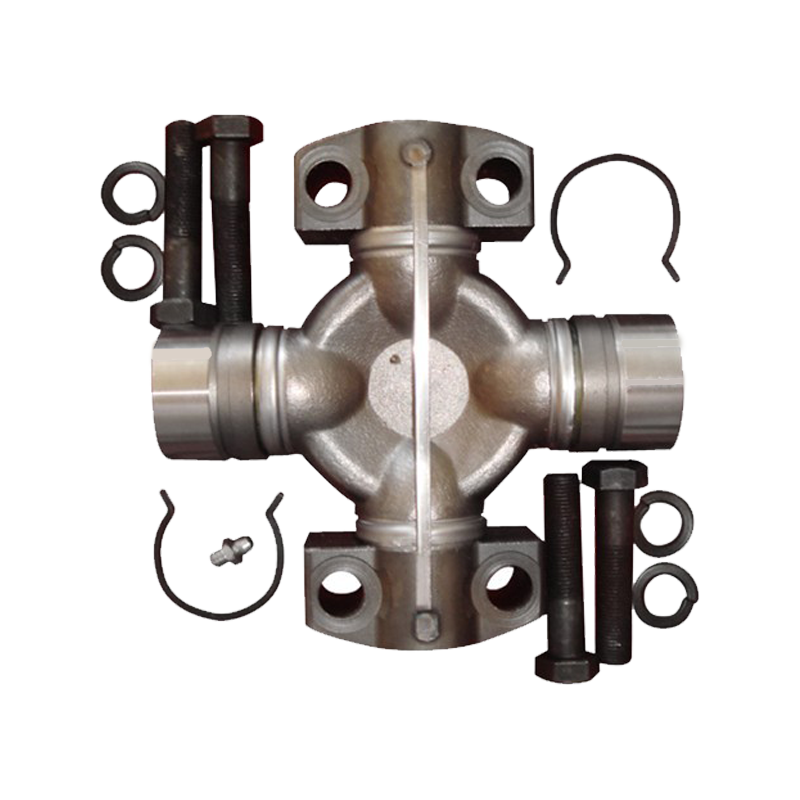
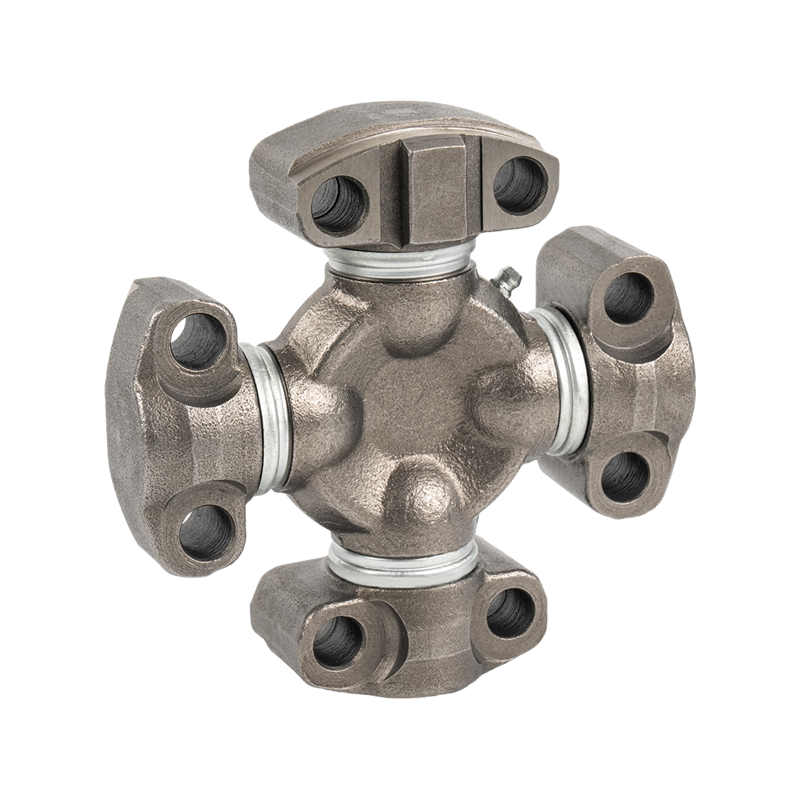
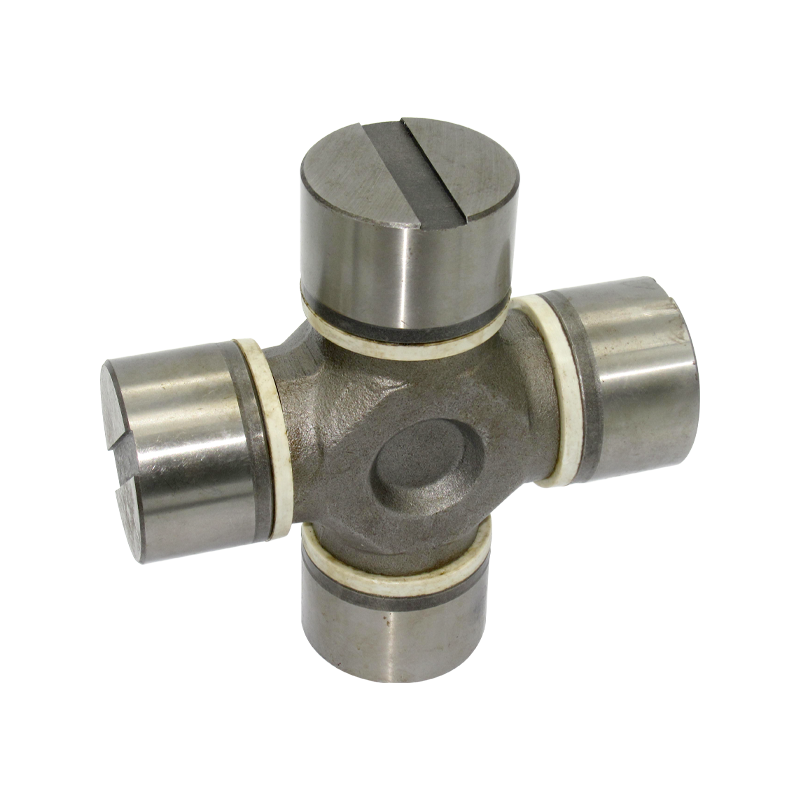
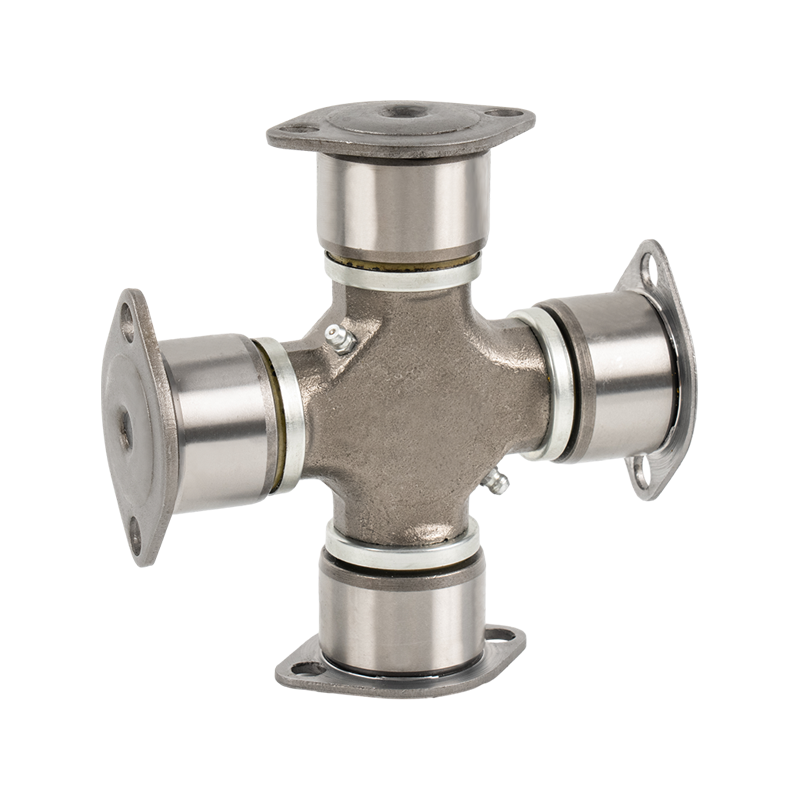
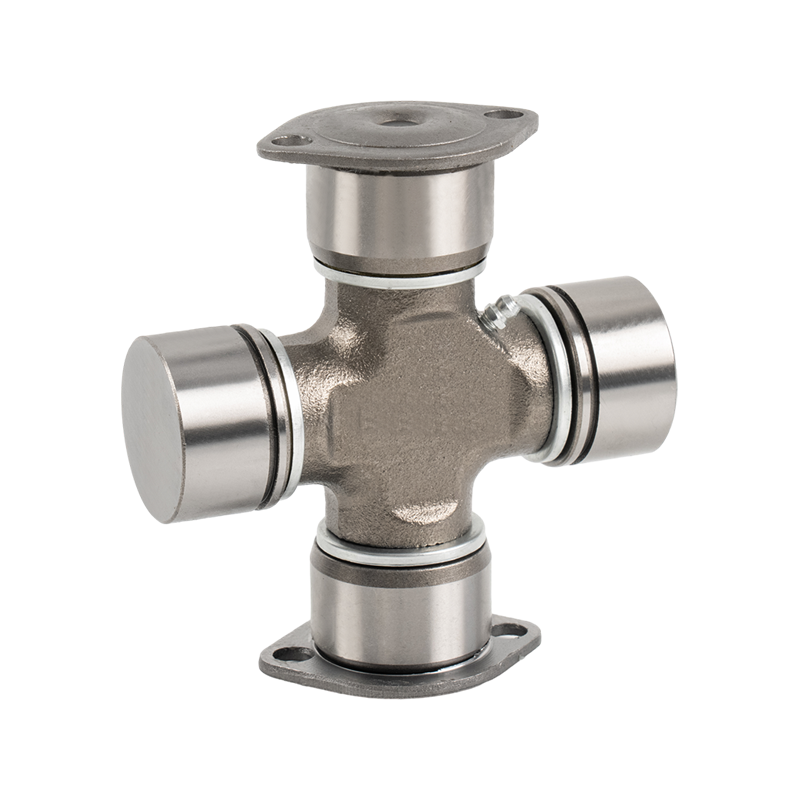
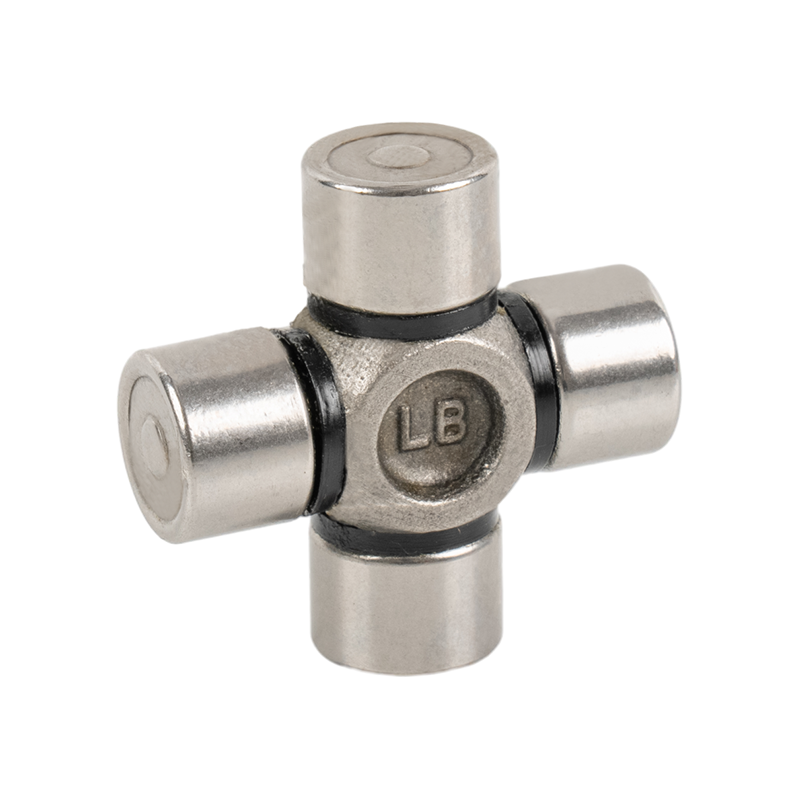
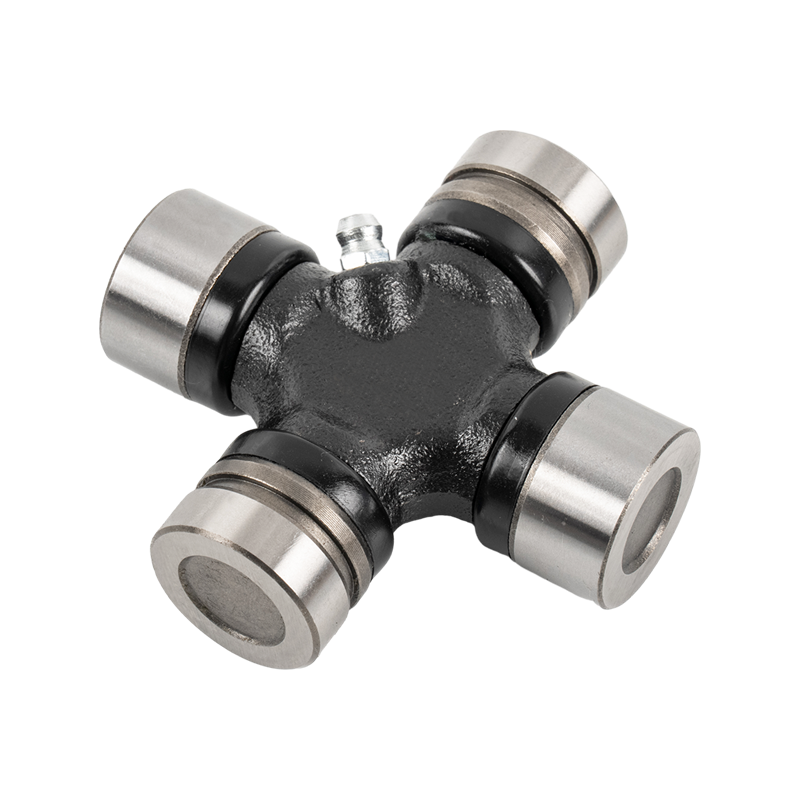
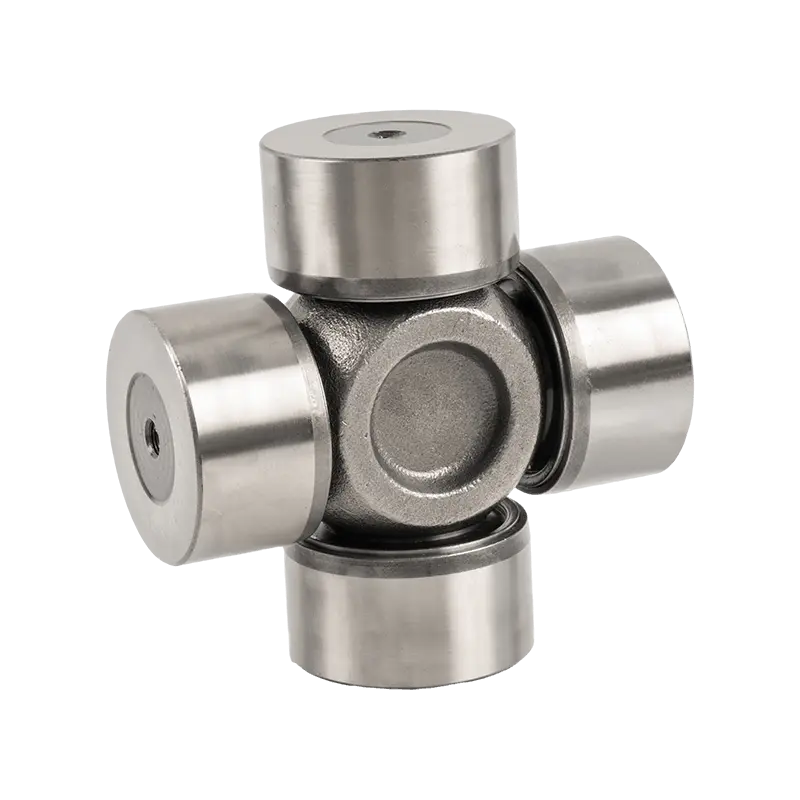
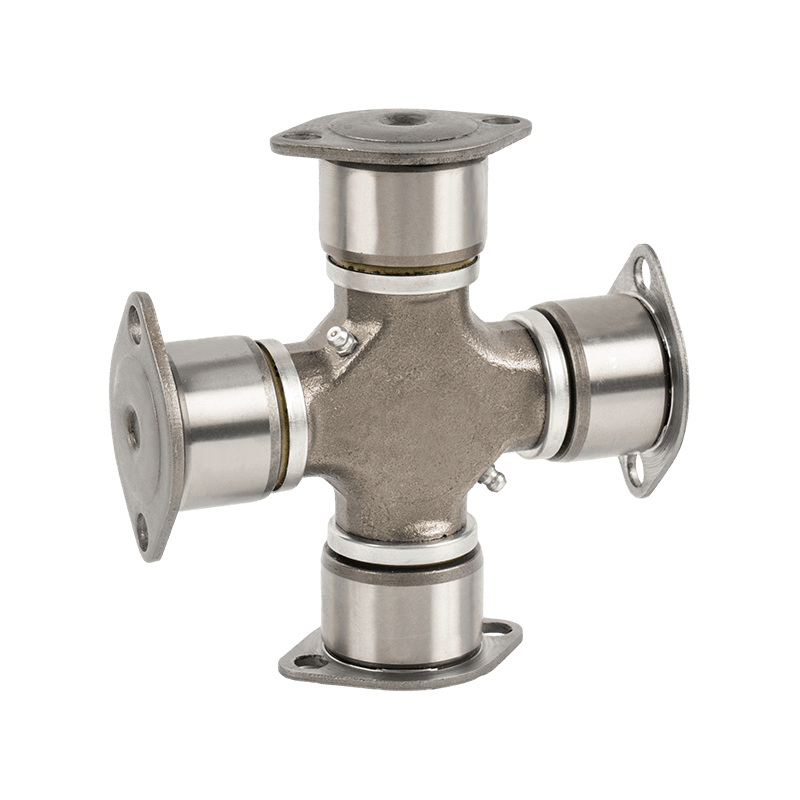
A conventional automotive u-joint — technically a Cardan joint, named after the 16th-century Italian mathematician Gerolamo Cardano who described its geometry — consists of four main components:
- The cross (or spider): A four-armed steel cross that forms the pivot point of the joint. Each arm is precision-ground and hardened to withstand continuous torsional stress.
- Bearing cups (trunnion caps): Four cup-shaped housings — one on each arm of the cross — packed with needle bearings. They allow each arm to rotate freely within the yoke.
- Needle bearings: Small cylindrical roller bearings inside each cup that reduce friction and distribute load across the bearing surface.
- Yokes: The forked connectors attached to the driveshaft on each side. The bearing cups press into the yoke ears, completing the assembly. The two yokes are positioned 90 degrees apart on the cross.
The Speed Fluctuation Problem and How It's Solved
A single Cardan u-joint has an inherent limitation: it introduces a cyclic speed variation in the output shaft at angles above 3–5 degrees. As the joint rotates through one full revolution, the output shaft accelerates and decelerates twice per revolution — a phenomenon called velocity fluctuation or angular velocity error. At a 10-degree operating angle, this causes a noticeable vibration. At 20 degrees or more, it becomes severe.
The engineering solution is to use two u-joints in a driveshaft, with the yokes phased (positioned) correctly so the velocity fluctuation of the first joint cancels out that of the second. This is why nearly all automotive driveshafts have a u-joint at each end rather than just one. The operating angles of both joints must be within approximately 1 degree of each other for effective cancellation — a critical factor during driveshaft installation or suspension modification.
Where U-Joints Are Located in a Vehicle
U-joints appear in multiple locations across the drivetrain and steering system, depending on the vehicle's drive configuration. Understanding their locations helps pinpoint the source of symptoms when problems develop.
| Location | Vehicle Type | Function | Quantity |
|---|---|---|---|
| Front of driveshaft (transmission end) | RWD, 4WD, AWD | Connects transmission output shaft to driveshaft | 1 |
| Rear of driveshaft (axle end) | RWD, 4WD, AWD | Connects driveshaft to rear differential pinion | 1 |
| Center carrier bearing (two-piece shaft) | Long-wheelbase trucks, SUVs | Joins front and rear driveshaft sections | 1–2 |
| Front axle shafts | 4WD trucks, solid front axle | Transmits torque through steering knuckle | 2 |
| Steering shaft | Most vehicles | Connects steering column to steering rack or box | 1–2 |
Front-wheel-drive vehicles do not typically use traditional u-joints in the driveshaft — they use CV (constant velocity) joints instead, which handle higher operating angles without velocity fluctuation. However, many FWD vehicles still use small u-joints in the steering shaft.
Types of U-Joints: Not All Are Created Equal
Several distinct u-joint designs exist, each optimized for different operating angles, torque loads, and application requirements. Knowing the differences helps when replacing or upgrading driveline components.
Cardan (Cross and Bearing) U-Joint
The most common u-joint type in automotive applications. Simple, inexpensive, and available in a vast range of sizes. Standard automotive Cardan u-joints operate efficiently at angles up to about 15–18 degrees, though best practice is to keep driveshaft operating angles below 3–6 degrees for long service life and smooth operation. They require periodic lubrication (greaseable versions) or are sealed-for-life units.
Double Cardan (CV) U-Joint
A double Cardan joint consists of two standard Cardan joints connected by a centering socket and ball assembly. This design produces true constant velocity output — eliminating the speed fluctuation inherent in a single Cardan joint — at angles up to 35–40 degrees. Double Cardan joints are standard on the front driveshafts of many 4WD trucks and SUVs, including the Ford F-150, Ram 1500, and Toyota 4Runner, where the front axle operating angles are high due to steering and suspension movement.
Rzeppa CV Joint
Technically a constant velocity joint rather than a traditional u-joint, the Rzeppa is the standard joint on front-wheel-drive axle shafts and independent rear suspension vehicles. It uses six steel balls in a cage to transmit torque at angles up to 47 degrees without velocity fluctuation. While not called a u-joint in common usage, it fills the same role in FWD and IRS drivetrains.
Spicer-Style and Non-Greaseable (Sealed) U-Joints
Within the Cardan category, u-joints are further divided by lubrication design. Greaseable u-joints (with a zerk fitting) last significantly longer when properly serviced — typically every 5,000–10,000 miles or at each oil change. Sealed (non-greaseable) u-joints come pre-packed with grease and require no maintenance until they wear out, usually at 50,000–100,000 miles under normal conditions.
Warning Signs of a Failing U-Joint
U-joints wear gradually, but their failure symptoms are usually unmistakable once they begin. Catching them early prevents more expensive driveline damage and avoids the safety risk of a sudden driveshaft failure.
The Most Common Symptoms
- Clunking or knocking noise when shifting gears or changing direction: One of the earliest and most reliable indicators. The clunk occurs as slack in the worn joint is taken up when drive load reverses — characteristic when going from drive to reverse, or accelerating from a stop.
- Vibration that increases with vehicle speed: A worn u-joint causes the driveshaft to rotate out of balance. The vibration typically begins around 45–55 mph and intensifies above 60 mph. It may feel like a rumble through the floor, seat, or shifter.
- Squeaking noise at low speeds: Dry needle bearings — from a neglected greaseable joint or a failed seal on a sealed unit — produce a rhythmic squeak that matches vehicle speed. This is the joint's last warning before physical failure.
- Visible rust or movement in the joint: A physical inspection showing rust staining around the bearing cups, or any lateral play when the driveshaft is rocked by hand, indicates a u-joint that needs immediate replacement.
- Transmission fluid leak at the rear seal: A severely worn u-joint can cause the driveshaft to vibrate violently enough to damage the transmission output shaft seal, resulting in a fluid leak independent of the joint itself.
How to Test a U-Joint by Hand
- With the vehicle safely raised on jack stands and the transmission in neutral, reach under and grip the driveshaft near each u-joint.
- Attempt to rotate the driveshaft while holding the adjacent shaft stationary. Any rotational play (clunk or looseness) felt in the joint indicates worn needle bearings and a u-joint that needs replacement.
- Inspect visually for rust staining (orange or reddish discoloration around the bearing cup edges), which indicates a failed seal and loss of lubrication.
- Check for any side-to-side movement in the cross — this indicates the bearing cups are loose in the yoke, a sign of advanced wear requiring immediate attention.
U-Joint Replacement: Cost, Difficulty, and When to DIY
Replacing u-joints is one of the more accessible drivetrain repairs for mechanically inclined vehicle owners, but it requires specific tools and careful attention to driveshaft phasing and torque specs.
Typical U-Joint Replacement Costs
| Repair Scenario | Parts Cost | Labor Cost | Total Estimate |
|---|---|---|---|
| Single driveshaft u-joint (light truck/SUV) | $15–$60 | $80–$200 | $100–$260 |
| Both driveshaft u-joints replaced together | $30–$120 | $120–$250 | $150–$370 |
| Double Cardan (CV) u-joint replacement | $80–$250 | $150–$350 | $230–$600 |
| Front axle u-joint (solid axle 4WD) | $30–$80 | $150–$400 | $180–$480 |
| Complete driveshaft assembly replacement | $200–$600 | $100–$200 | $300–$800 |
DIY U-Joint Replacement: What You Need
- U-joint press or bench vise with sockets: The bearing cups must be pressed out of the yoke — they cannot be driven out safely with a hammer and punch without risking yoke damage. A u-joint press tool costs $20–$50 at auto parts stores.
- Snap ring pliers: Most automotive u-joints are retained in the yoke by internal snap rings (circlips) that must be removed before the bearing cups can be pressed out.
- Torque wrench: Driveshaft flange bolts typically require 55–95 ft-lbs depending on the vehicle; under- or over-torquing can cause vibration or bolt failure.
- Paint or scribe marks before removal: Mark the driveshaft orientation relative to the differential flange before unbolting — reassembling out of phase will cause immediate vibration even with new u-joints.
When to Replace Both U-Joints, Not Just One
Industry best practice is to replace both driveshaft u-joints simultaneously whenever one fails. Both joints experience identical mileage, operating temperatures, and stress cycles — if one has worn out, the other is typically within a few thousand miles of failure. The incremental parts cost of the second joint ($15–$60) is minimal compared to the labor cost of a second repair visit.
U-Joint vs CV Joint: Understanding the Difference
These two joint types are frequently confused because they perform the same basic function — transmitting torque between angled shafts — but they work differently and appear in different vehicle applications.
| Characteristic | U-Joint (Cardan) | CV Joint (Rzeppa) |
|---|---|---|
| Operating angle | Up to ~18° | Up to ~47° |
| Velocity output | Variable (fluctuates) | Constant |
| Typical application | RWD/4WD driveshafts | FWD/IRS axle shafts |
| Parts cost | $15–$60 (joint only) | $50–$200+ (axle shaft) |
| Failure sound | Clunk on load change | Clicking during turns |
| Repairability | Joint replaced in yoke | Usually replaced as axle |
| Lubrication | Grease (serviceable or sealed) | Grease inside rubber boot |
The practical diagnostic tip: if you hear a clunk when shifting between drive and reverse, suspect a u-joint. If you hear a clicking or popping noise specifically during low-speed turns (steering wheel turned near full lock), suspect a CV joint.
How Long Do U-Joints Last and What Affects Their Lifespan
U-joint service life varies enormously based on vehicle use, lubrication practices, and operating environment. Under normal highway conditions, quality sealed u-joints typically last 75,000–150,000 miles. Greaseable units maintained on schedule can last the life of the vehicle. However, several factors dramatically shorten this lifespan.
Factors That Accelerate U-Joint Wear
- Neglected greasing intervals: The most common cause of premature u-joint failure. A greaseable joint run dry for even a few thousand miles develops metal-to-metal contact in the needle bearings that causes rapid wear. Most manufacturers recommend greasing every 5,000 miles or at each oil change.
- Excessive operating angles: Suspension lifts on 4WD trucks are a common culprit. Lifting a truck 3–4 inches without adding a driveshaft drop kit or slip yoke eliminator can increase driveshaft angles to 8–12 degrees — well above the optimal range — reducing u-joint life by 40–60%.
- Off-road and high-torque use: Hard acceleration, towing, and off-road articulation all impose peak torque loads on u-joints that far exceed steady-state highway cruising. Trucks used for towing regularly may see u-joint replacement intervals as short as 30,000–50,000 miles.
- Water and contamination ingestion: Driving through deep water or mud can flush lubricant from even well-sealed u-joints. Off-road vehicles should have their u-joints inspected and greased (if applicable) after every significant water crossing.
- Low-quality replacement parts: Budget u-joints from unknown brands often use softer steel in the cross and thinner needle bearing cups.
U-Joints Beyond Automotive: Industrial and Other Applications
While most people encounter u-joints in the context of cars and trucks, these couplings appear across a remarkable range of mechanical systems wherever rotating power must be transmitted between misaligned shafts.
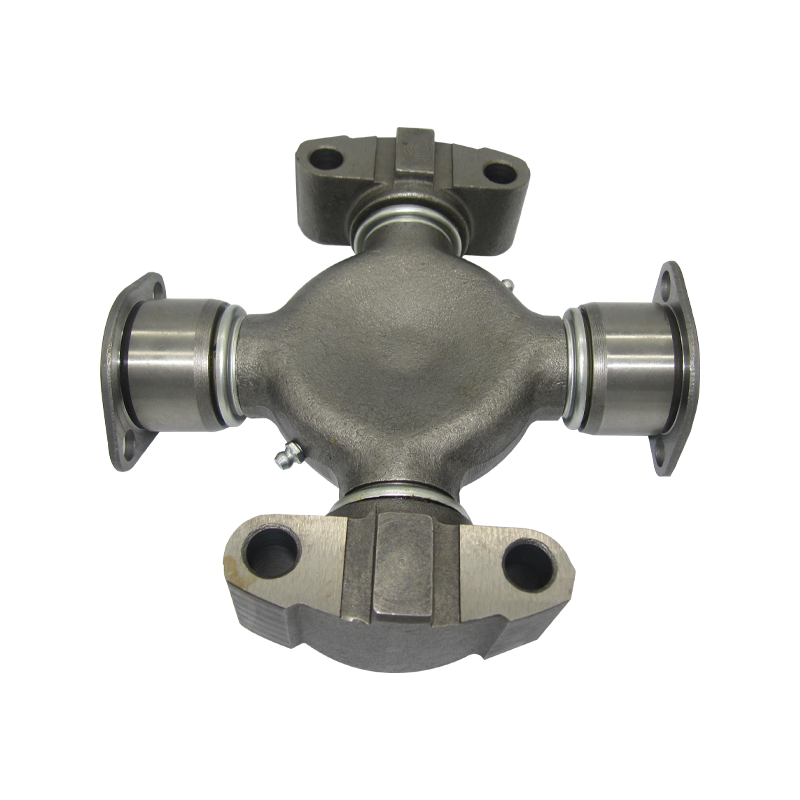
- Agricultural equipment: PTO (power take-off) shafts connecting tractors to implements like mowers, tillers, and balers use heavy-duty u-joints rated for high torque and constant angular change. Agricultural u-joints are typically much larger than automotive units — 1¾" to 2" cross sizes are common versus the ¾"–1⅜" range of most automotive joints.
- Industrial machinery: Rolling mills, paper mills, printing presses, and packaging equipment use large industrial u-joints (also called universal couplings) to transmit power between machine components that can't be perfectly aligned. Industrial u-joints may be rated for millions of inch-pounds of torque.
- Marine applications: Inboard boat engines use u-joints in the driveshaft connecting the transmission to the propeller shaft — a challenging environment given the corrosive effects of water and the variable angles created by propeller shaft inclination.
- Aerospace: Small u-joints appear in aircraft control linkages, actuator systems, and accessory drive shafts where compact, reliable angular transmission is required.
- Medical and robotics: Miniature u-joints (as small as 2–3mm) are used in surgical instruments, robotic end-effectors, and camera positioning systems where precise, low-friction angular motion transmission is required in a very small package.