

 Language
 中文简体
中文简体
What Does a Bad U-Joint Sound Like? Signs & fixes
Content
- 1 What a U-Joint Is and What It Does
- 2 The Specific Sounds a Bad U-Joint Makes
- 3 U-Joint Failure Sounds vs. Other Common Drivetrain Noises
- 4 Why U-Joints Fail: Root Causes Behind the Noise
- 5 How to Diagnose a Bad U-Joint at Home
- 6 The Stages of U-Joint Failure: From First Squeak to Driveshaft Separation
- 7 How to Confirm the Noise Is the U-Joint, Not the Transmission or Differential
- 8 U-Joint Replacement Cost and What to Expect
- 9 Preventing U-Joint Failure: Maintenance That Extends Service Life
A bad U-joint most commonly produces a clunking, knocking, or squeaking noise that appears during acceleration, deceleration, or when shifting between drive and reverse. The sound typically comes from underneath the vehicle near the driveshaft and changes in intensity with vehicle speed or load. In many cases, a failing U-joint also causes a vibration felt through the floor or seat that gets worse as speed increases. Left unaddressed, a worn U-joint can separate completely — causing catastrophic driveshaft failure and loss of vehicle control.
This guide covers every sound a bad U-joint makes, explains why each noise occurs, and walks through how to confirm a U-joint is the source — not a CV axle, differential, or wheel bearing — before spending time or money on the wrong repair.
What a U-Joint Is and What It Does
A universal joint (U-joint) is a mechanical coupling that connects two rotating shafts at an angle, allowing torque to be transmitted even when the shafts are not perfectly aligned. On rear-wheel-drive and four-wheel-drive vehicles, U-joints connect the transmission output shaft to the driveshaft, and the driveshaft to the rear differential — allowing the driveshaft to flex as the suspension moves up and down while still transferring engine power to the wheels.
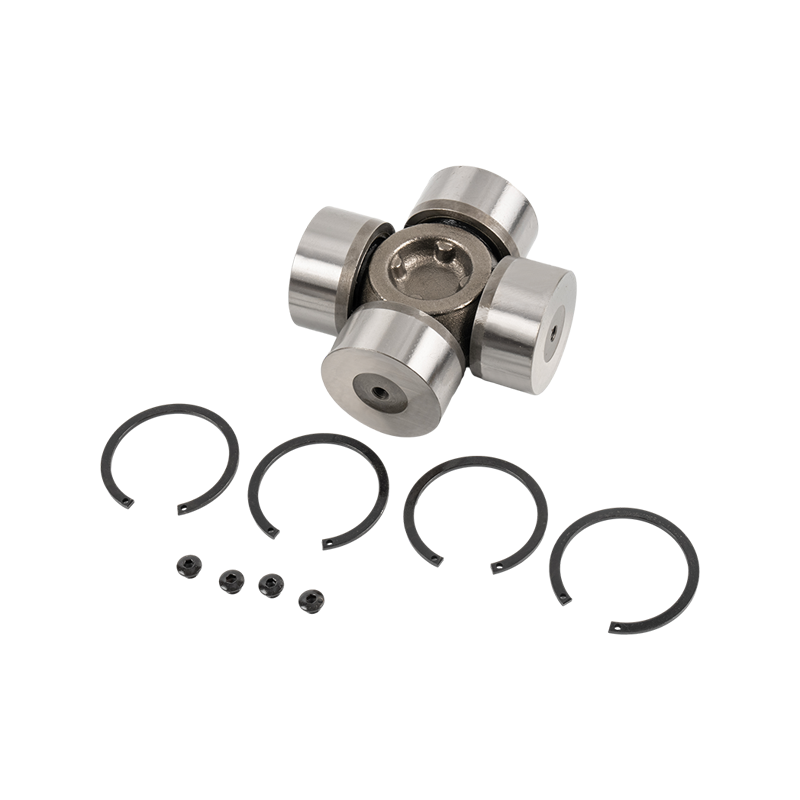
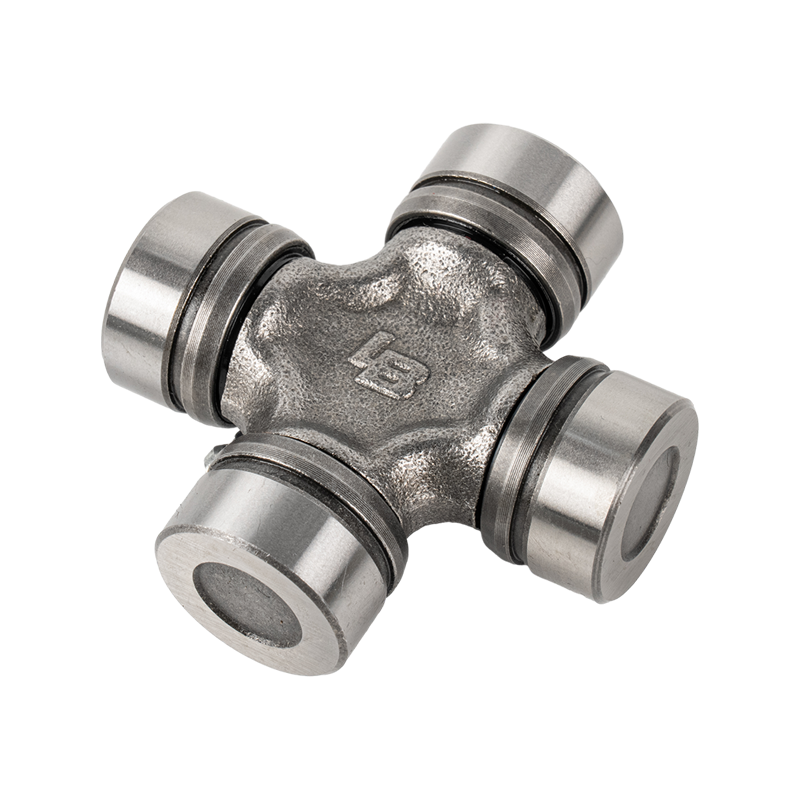
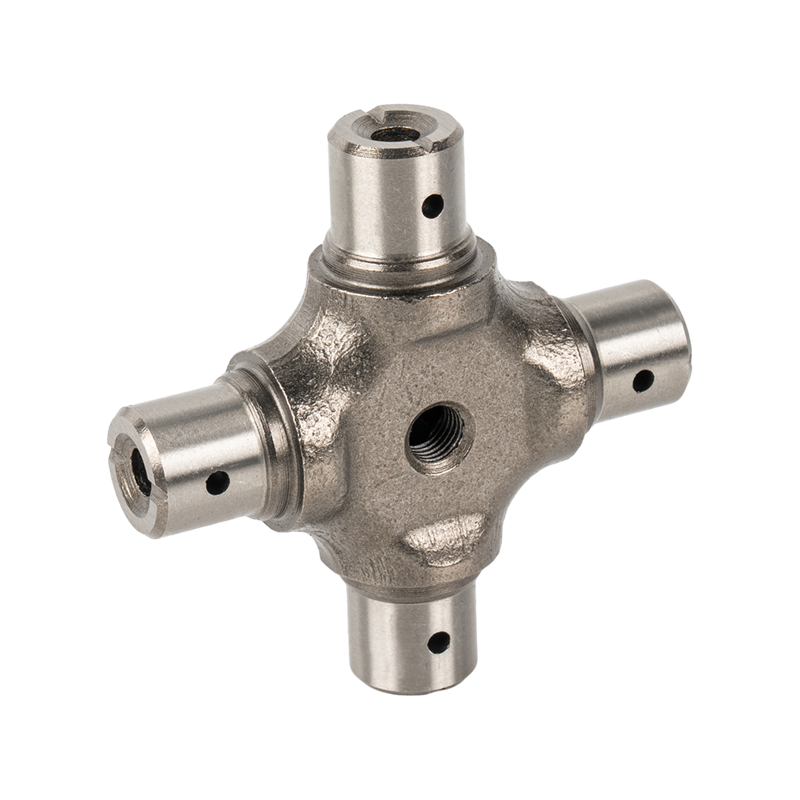
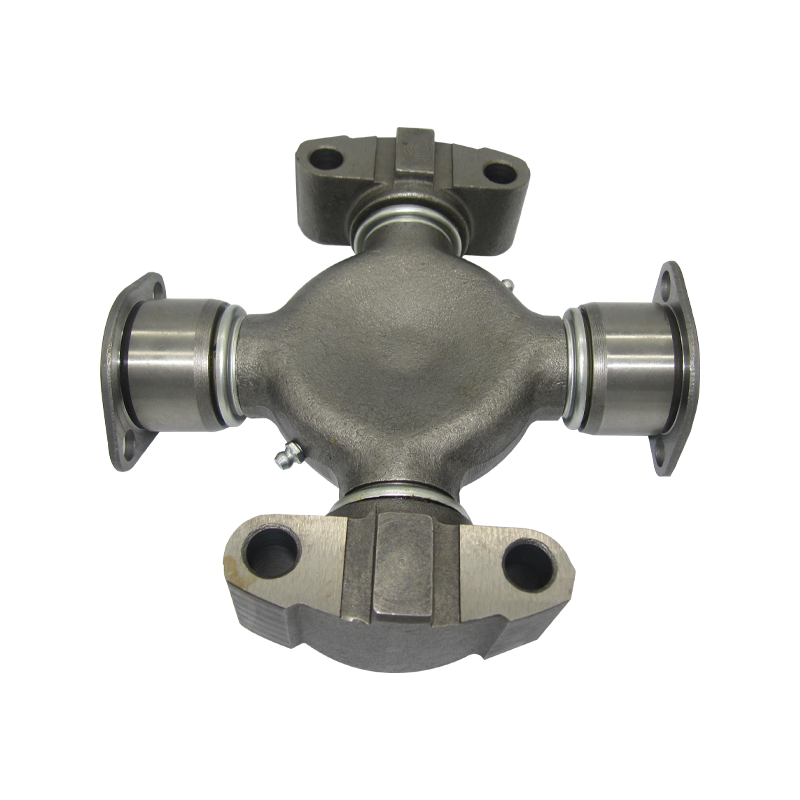
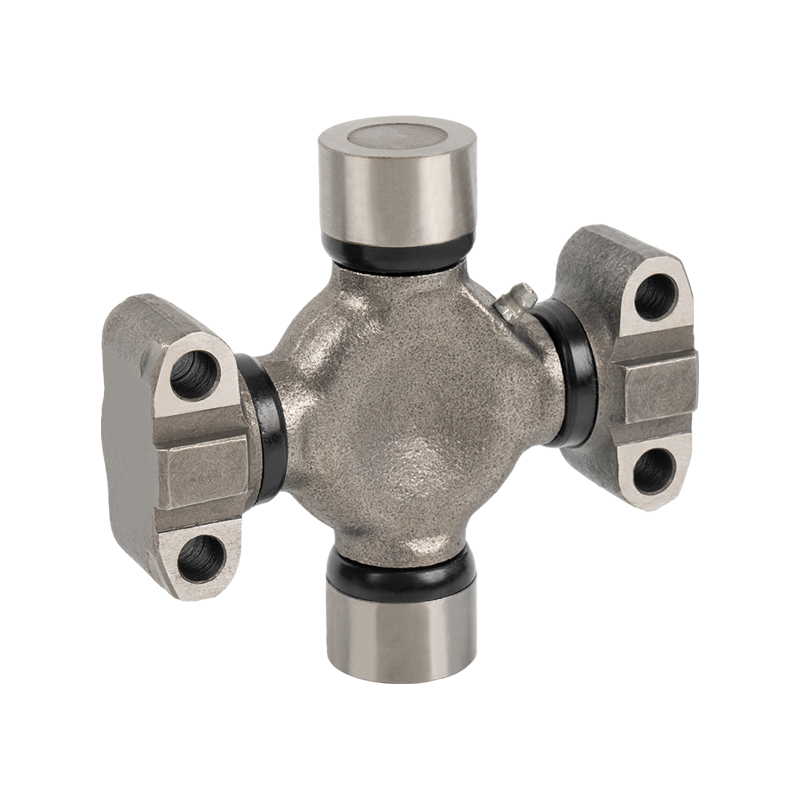
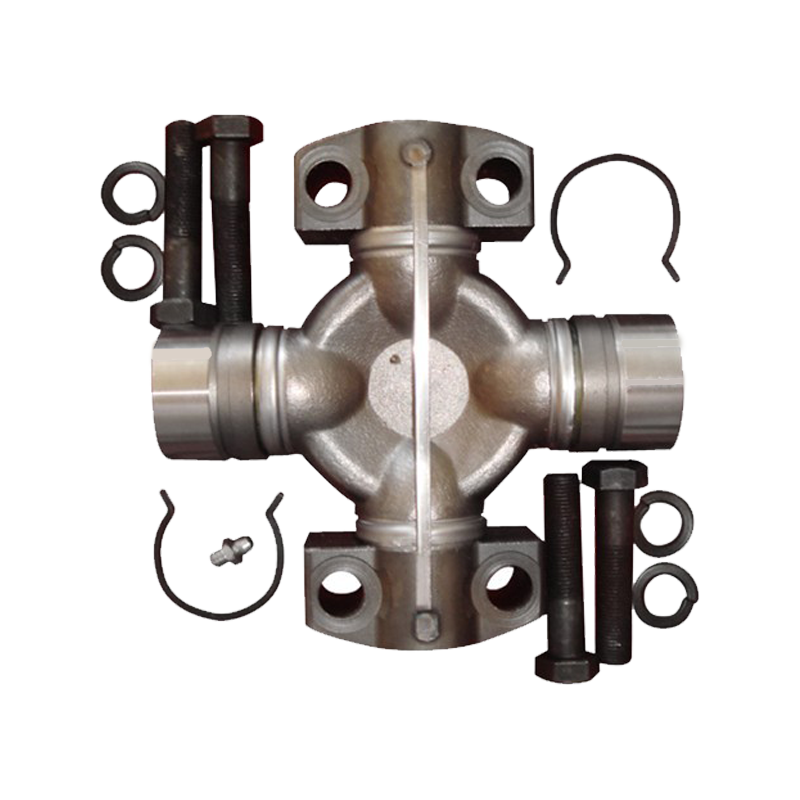
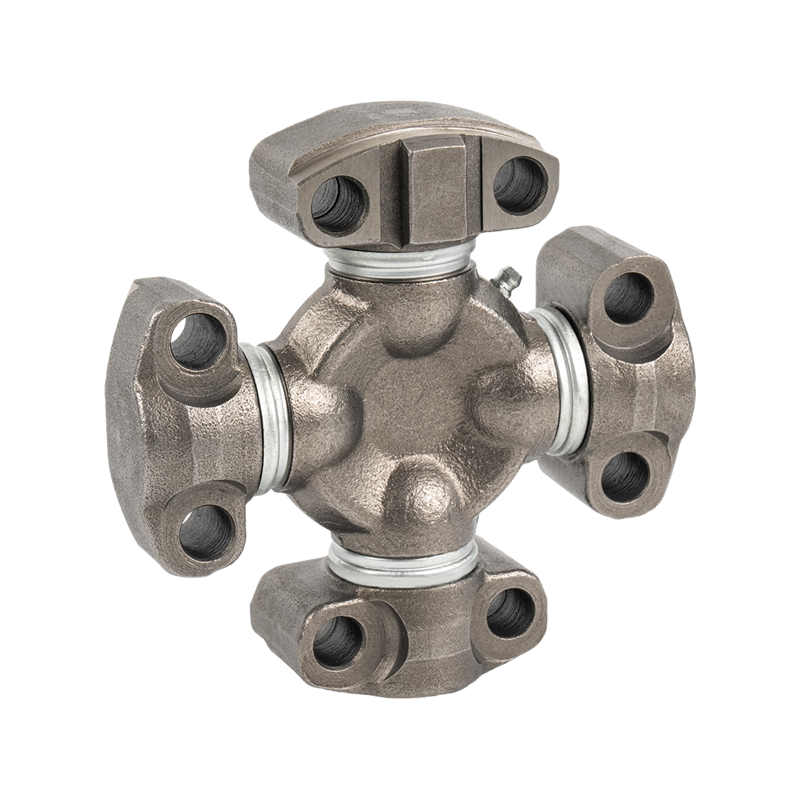
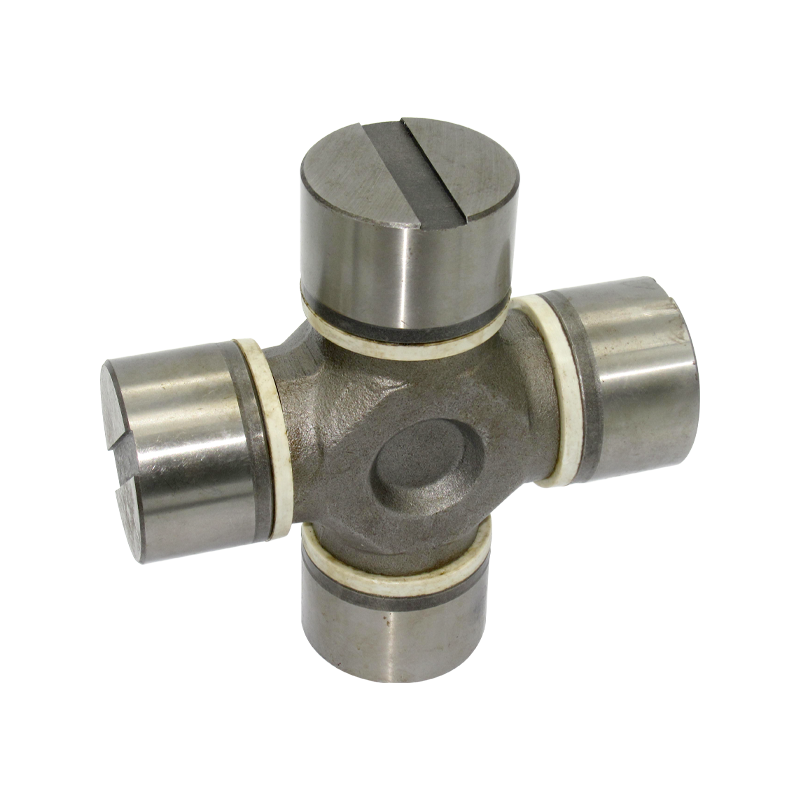
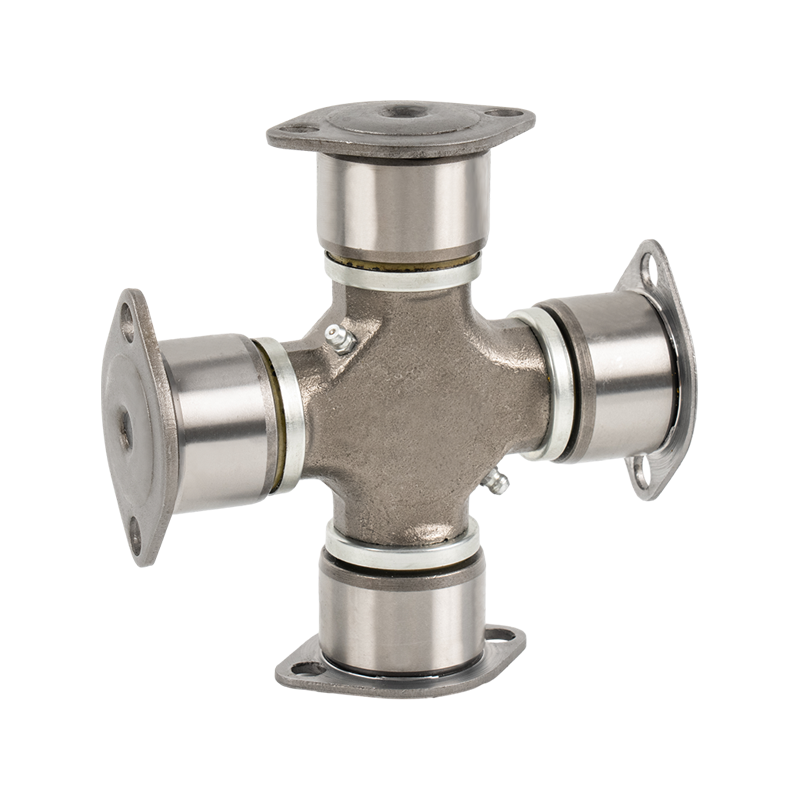
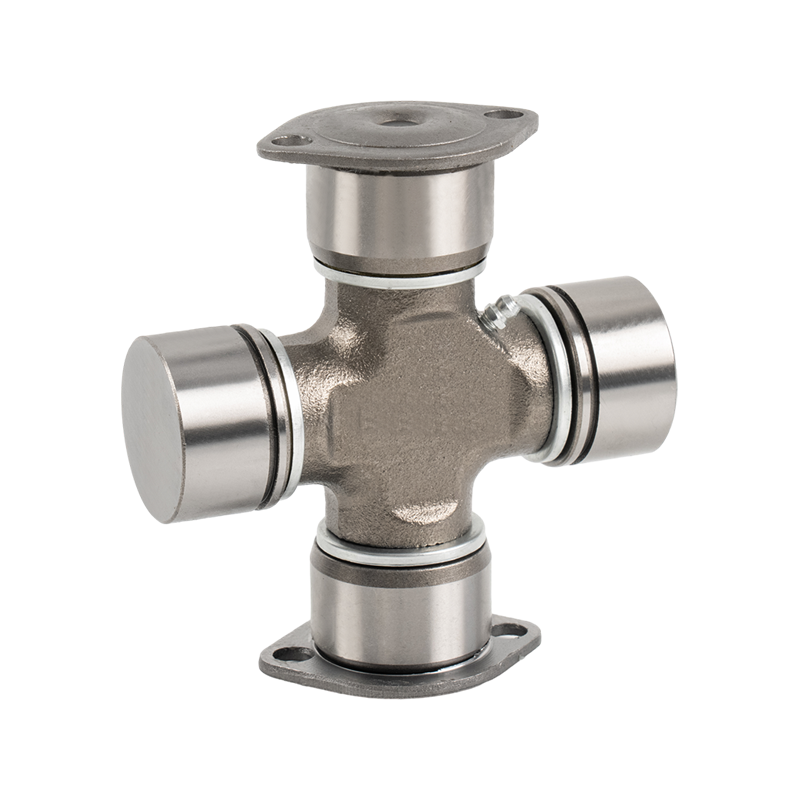
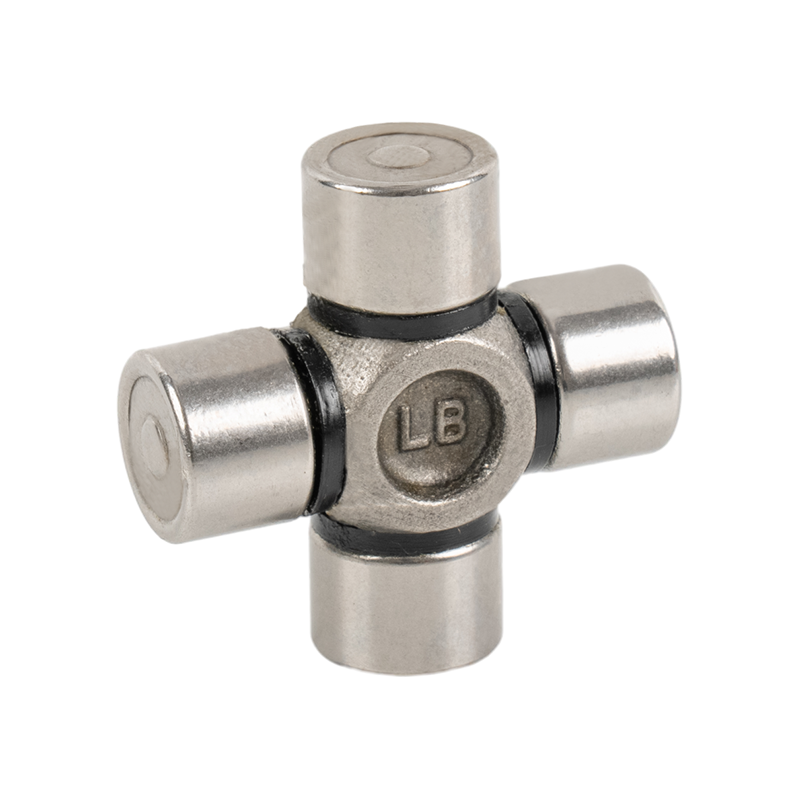
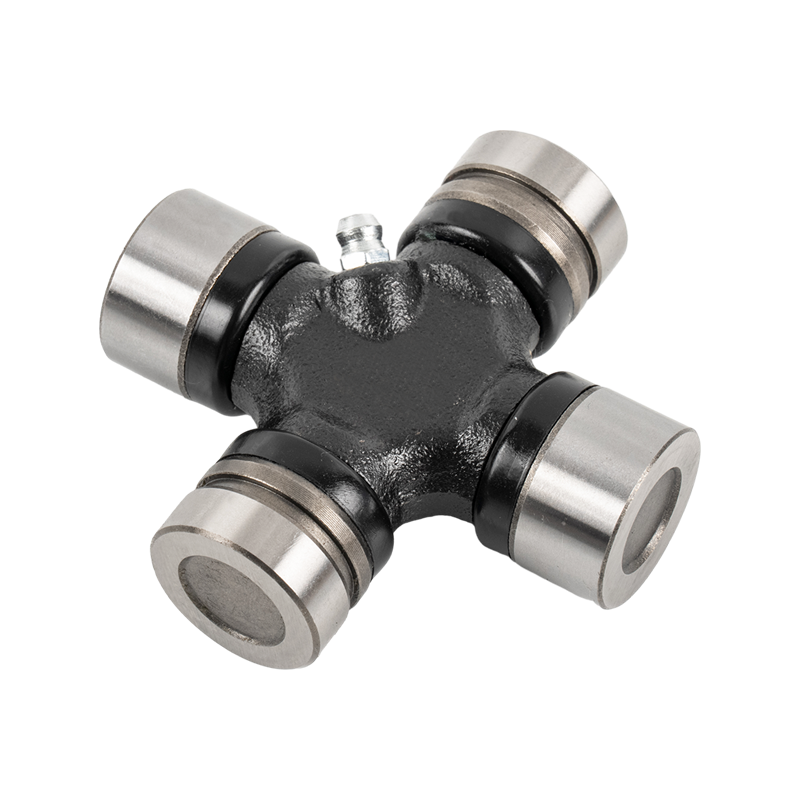
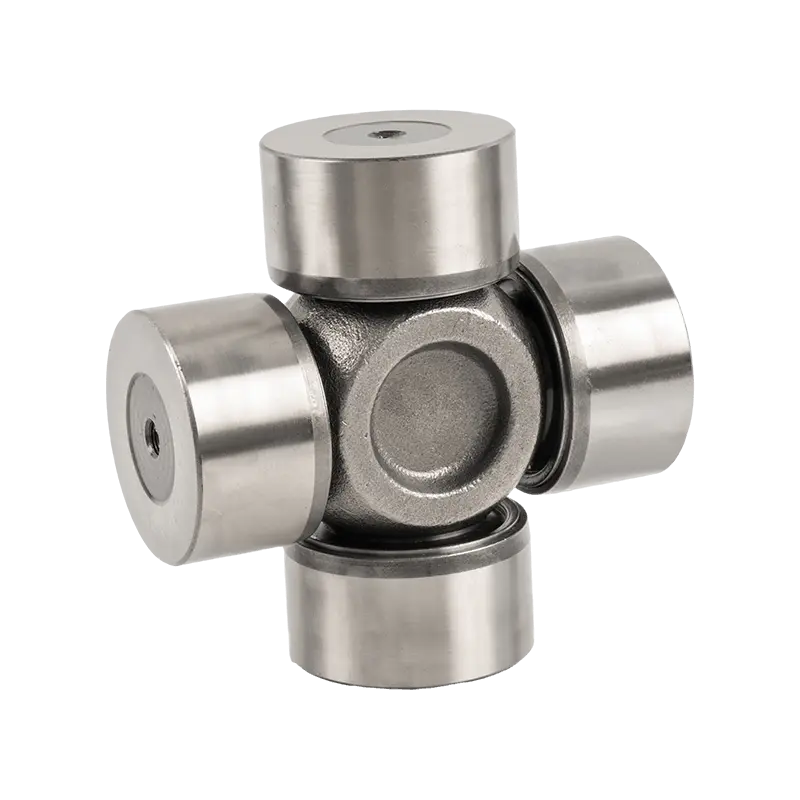
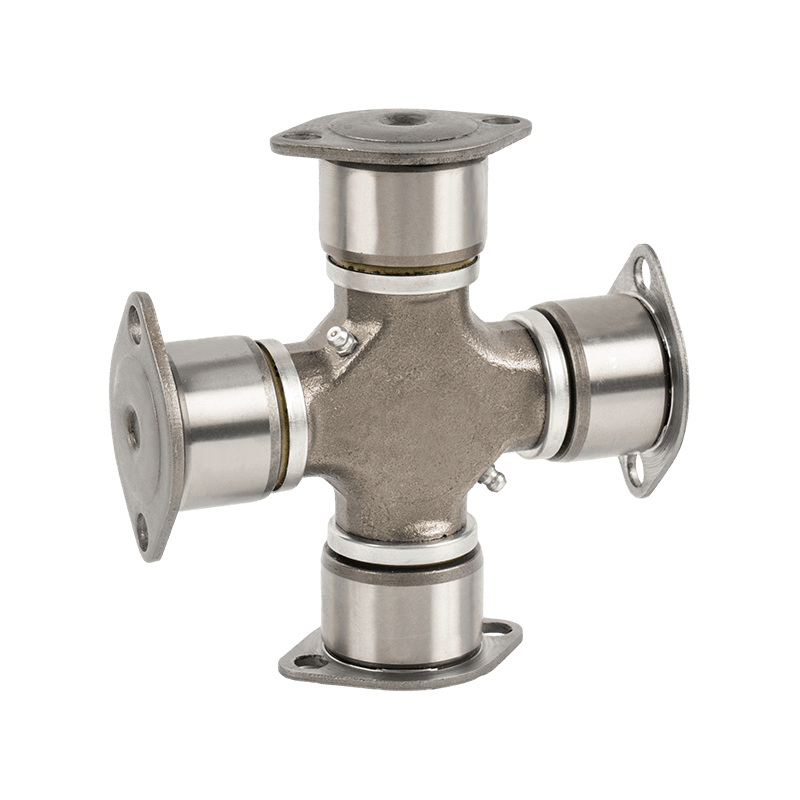
A typical U-joint consists of a cross-shaped center piece called a trunnion or spider, four bearing caps packed with needle roller bearings, and snap rings or U-bolts that secure the caps to the yokes. Most passenger vehicle U-joints are rated for 100,000 to 150,000 miles under normal conditions, though off-road use, heavy towing, and lack of lubrication dramatically shorten service life. Some sealed U-joints are non-greaseable and fail sooner — often within 60,000 to 80,000 miles — particularly in vehicles driven in wet or muddy conditions.
The Specific Sounds a Bad U-Joint Makes
The noise a failing U-joint produces depends on the failure mode — whether the joint is dry and worn, cracked, or has lost needle bearings. Each sound pattern points to a different stage of failure and a different level of urgency.
Clunking or Knocking During Acceleration or Deceleration
This is the most commonly reported bad U-joint sound. A distinct clunk or knock when accelerating from a stop, or when lifting off the throttle, is a strong indicator of a worn or loose U-joint. The clunk is caused by excessive play in the joint — the needle bearings have worn or the trunnion has developed slop, so there is momentary backlash as torque direction reverses. The sound often happens exactly once per transition (one clunk on acceleration, one on deceleration) rather than continuously. This characteristic single-clunk pattern under load transition is one of the most reliable diagnostic cues distinguishing U-joint failure from differential or transmission noise.
Squeaking or Squealing at Low Speeds
A rhythmic squeaking or squealing sound at low vehicle speeds — often described as happening once per driveshaft rotation — usually indicates a U-joint that is dry and running without adequate lubrication. The needle bearings inside the bearing caps are metal-on-metal, and without grease they generate friction noise every time they pass through the high-load position in the joint's rotation. This squeak is typically speed-dependent: it speeds up as vehicle speed increases and disappears at highway speeds, replaced by vibration as the worn joint cannot maintain smooth rotation at higher RPM. If your U-joint is greaseable (has a Zerk fitting), this stage is often reversible — grease introduced at this point may restore quiet operation temporarily while you arrange for replacement.
Metallic Scraping or Grinding Noise
A grinding or scraping sound from under the vehicle during driving — particularly one that changes pitch or intensity with vehicle speed — suggests a U-joint where the bearing cups have worn through or the trunnion surfaces have corroded severely. At this stage, the joint is operating metal-on-metal without any bearing surface, and failure is imminent. This is a drive-immediately-to-a-shop-or-stop-driving situation. The driveshaft can separate from the vehicle within miles once grinding begins.
Vibration That Feels and Sounds Like a Rumble
A bad U-joint that has developed significant wear does not rotate smoothly — it creates an imbalance in the driveshaft that produces a vibration felt through the floor, seat, and sometimes the steering wheel. This vibration often sounds like a low-frequency rumble or drone that begins around 45 to 55 mph and may lessen or change tone at higher speeds. Unlike tire imbalance (which typically appears at a specific speed range and disappears at higher speeds), a U-joint vibration tends to get progressively worse with speed and does not cycle on and off in the same predictable way.
Clunking When Shifting Between Drive and Reverse
One of the most telling U-joint symptoms is a hard clunk when moving the selector from Drive to Reverse, or from Park to Drive, particularly when the vehicle is stationary. This happens because shifting gears reverses the load direction on the driveshaft — a worn U-joint with excessive play bangs through that play when the torque direction changes. Many drivers first notice this symptom when maneuvering in parking lots or driveways and mistake it for a transmission or differential problem.
U-Joint Failure Sounds vs. Other Common Drivetrain Noises
The sounds a bad U-joint produces overlap significantly with those from wheel bearings, CV axles, differentials, and transmission output shaft bearings. Misdiagnosis is common, and replacing the wrong component wastes hundreds of dollars. The table below compares the key distinguishing characteristics.
| Component | Sound Type | When It Occurs | Key Distinguisher |
|---|---|---|---|
| Bad U-joint | Clunk, squeak, vibration | Accel/decel transitions, gear shifts, all speeds | Single clunk on load reversal; squeak is speed-dependent |
| Worn wheel bearing | Humming, growling, rumble | Continuous while rolling; changes when turning | Noise shifts when swerving left or right; tied to wheel speed |
| Worn CV axle/joint | Clicking, popping | Turning, especially under acceleration | Click gets louder in tight turns; worsens when accelerating through a turn |
| Differential wear | Whining, howling | Specific speeds (often 40–60 mph); sometimes in turns only | Whine changes pitch with speed in a predictable pattern; no clunk |
| Loose heat shield | Rattling, buzzing | Often at idle or low speeds; engine RPM-dependent | Rattle goes away when RPM changes; no correlation to vehicle speed |
| Slip yoke wear | Clunk, thud | Accel/decel transitions | Sound is identical to U-joint clunk; requires physical inspection to differentiate |
The single most reliable way to differentiate a U-joint clunk from a slip yoke or differential problem is a physical inspection under the vehicle with the drivetrain at rest — described in the diagnosis section below.
Why U-Joints Fail: Root Causes Behind the Noise
Understanding why a U-joint fails helps both in diagnosing the problem and in preventing premature failure after replacement. The noise is a symptom — the underlying cause is almost always one of five conditions.
Lack of Lubrication
Greaseable U-joints require periodic lubrication — most manufacturers specify greasing every 5,000 miles or at every oil change for vehicles used in severe conditions (off-road, towing, or frequent water crossings). Sealed (non-greaseable) U-joints are factory-lubricated and cannot be serviced, which means when the grease degrades — typically after 60,000 to 80,000 miles — failure follows. Dry needle bearings overheat, pit, and eventually disintegrate, creating the rhythmic squeaking and then the grinding described above.
Corrosion from Water and Mud Intrusion
Water, mud, and road salt are among the most destructive forces for U-joints. When contaminated water enters the bearing caps — which happens when rubber seals on the bearing cups crack or are damaged — it washes out the grease and promotes rapid rust on the trunnion surfaces and needle bearings. Vehicles driven through deep water or off-road conditions can experience U-joint failure in under 30,000 miles if the joints are not greased frequently and seals are not inspected regularly.
Operating at Extreme Angles
U-joints are designed to operate efficiently at angles up to approximately 15 to 20 degrees. Vehicles with lifted suspensions or modified driveshaft geometry that push joint angles beyond this range place the bearings under significantly higher stress at every rotation, dramatically accelerating wear. This is why lifted trucks and off-road vehicles with stock U-joints often experience premature failure — the geometry change created by the lift was not compensated for with a different driveshaft or double-cardan joint.
Overloading and High-Torque Applications
Towing heavy loads, vehicle launches with high throttle, and aggressive four-wheel-drive use all place peak torque loads on U-joints that exceed their design specification over time. The trunnion cross can develop stress fractures and the bearing caps can loosen from their snap ring grooves, leading to the clunking and eventually catastrophic separation described in later failure stages.
Age and Normal Wear
Even under ideal conditions, U-joints are wear items. The needle roller bearings cycle through their load zone millions of times over a vehicle's life — at 60 mph, the driveshaft on a typical rear-wheel-drive vehicle rotates at approximately 1,500 to 2,000 RPM, meaning each U-joint bearing set cycles through its load position more than 1,500 times per minute. Over 100,000 miles, that accumulates to an enormous number of fatigue cycles, and bearing surface degradation is inevitable.
How to Diagnose a Bad U-Joint at Home
Physical inspection is more reliable than sound alone for confirming a U-joint is the source of the noise. This procedure requires safely raising the vehicle on jack stands — never work under a vehicle supported only by a floor jack.
- Raise and support the vehicle on level ground using jack stands under the frame or designated lift points. Put the transmission in neutral.
- Locate the driveshaft — it runs from the back of the transmission (or transfer case) to the differential. Most rear-wheel-drive and 4WD vehicles have one or two driveshafts, each with two or more U-joints.
- Grip the driveshaft firmly with both hands and attempt to rotate it back and forth (not spin it, but rotate it a few degrees in each direction). Any perceptible free play — movement that occurs before the driveshaft engages the drivetrain — indicates excessive U-joint or slip yoke wear. A healthy driveshaft should have virtually zero rotational play.
- Grab the driveshaft and attempt to move it up, down, left, and right at each U-joint location. Any looseness or movement in the joint itself — the cross piece moving within the yoke — confirms the U-joint is worn beyond acceptable limits.
- Visually inspect each joint for rust streaks emanating from the bearing caps (a sign of water ingress and seal failure), missing or dislodged snap rings, or bearing caps that have begun to move out of their yoke seats.
- Rotate the driveshaft by hand through a full revolution and feel for roughness, binding, or resistance at any point in the rotation — a stiff or rough spot in a specific position indicates a seized or pitted bearing.
Any play detected in step 3 or 4, any roughness in step 6, or visible corrosion and seal damage in step 5 constitutes a failed U-joint that requires immediate replacement.
The Stages of U-Joint Failure: From First Squeak to Driveshaft Separation
U-joint failure is progressive — it does not happen suddenly in most cases. Understanding the stages helps vehicle owners gauge how much urgency to assign to the repair.
| Failure Stage | Primary Sound | Other Symptoms | Urgency |
|---|---|---|---|
| Stage 1 — Dry/Early Wear | Rhythmic squeaking at low speeds | No vibration yet; squeak disappears at highway speed | Schedule repair within 1–2 weeks |
| Stage 2 — Developed Play | Clunk on accel/decel; clunk on gear shifts | Mild vibration begins above 45 mph | Repair within days; avoid highway driving |
| Stage 3 — Severe Wear | Loud clunking; metallic grinding or scraping | Strong vibration; possible fluid leak from diff seal damage | Do not drive; repair immediately |
| Stage 4 — Imminent Failure | Intermittent or continuous loud banging | Severe vibration; driveshaft visibly wobbling or sagging | Stop driving immediately; tow vehicle |
A driveshaft that separates at highway speed can drop to the pavement, vault under the vehicle, and cause loss of control or contact with other vehicles. NHTSA records document multiple fatalities and serious accidents caused by driveshaft separation linked to failed U-joints. The cost of U-joint replacement — typically $150 to $400 at a shop including labor — must be weighed against this risk.
How to Confirm the Noise Is the U-Joint, Not the Transmission or Differential
Three simple tests — performed before spending money on replacement parts — help isolate U-joint noise from the transmission, differential, or wheel bearings.
The Park-to-Drive Clunk Test
With the vehicle on level ground and the parking brake applied, slowly move the selector from Park to Reverse, then from Reverse to Drive while listening carefully. A single, definite clunk each time the drivetrain loads up in a new direction — but no clunking during normal driving transitions in the same gear — strongly suggests U-joint play rather than transmission internal wear. Transmission noises are typically continuous or RPM-related rather than occurring only on directional load reversal.
The Steering Load Test for Wheel Bearing vs. U-Joint
At approximately 30 mph on a straight, empty road, gently weave the vehicle left and right while listening for the noise. If the noise changes significantly when the steering wheel is turned — louder when turning one direction, quieter when turning the other — the source is almost certainly a wheel bearing, not a U-joint. U-joint noise does not change meaningfully when steering load shifts side-to-side, because the driveshaft is a central component not affected by wheel angle on most RWD vehicles.
The Coast-Down Test for CV Axle vs. U-Joint
CV axle clicking typically only occurs under load during turning. If the clunking or noise occurs during straight-line driving — particularly when you lift off the throttle — and is absent during slow, tight turns, a CV axle is unlikely to be the cause. U-joint clunking is most prominent on straight-line acceleration and deceleration, not during turning. On front-wheel-drive vehicles with no traditional U-joints, clicking during turns that is absent during straight driving confirms a CV joint, not a U-joint.
U-Joint Replacement Cost and What to Expect
Once a U-joint is confirmed as the failure source, replacement is the only correct solution. Greasing a severely worn joint or applying stop-leak products does not restore structural integrity and only delays — briefly — the inevitable failure.
| Repair Scenario | Parts Cost | Labor Cost (Shop) | Total Estimate |
|---|---|---|---|
| Single U-joint, standard RWD truck/car | $15–$60 | $80–$150 | $100–$210 |
| Both U-joints, one driveshaft | $30–$120 | $100–$200 | $130–$320 |
| 4WD vehicle (front and rear driveshafts) | $60–$240 | $200–$400 | $260–$640 |
| Complete driveshaft replacement (damaged yokes) | $200–$600 | $100–$200 | $300–$800 |
Professional mechanics typically recommend replacing all U-joints on a driveshaft at the same time when one is found to be worn — the labor cost to remove and reinstall the driveshaft is the same whether you replace one joint or all of them, and a joint adjacent to a failed one has experienced the same service life and similar wear conditions. Replacing only the worst joint and leaving the others is a false economy.
For DIY replacement, a U-joint replacement requires a press or large C-clamp, snap ring pliers, and basic hand tools — it is a straightforward job for someone comfortable with drivetrain work. The parts cost of $15 to $60 per joint makes DIY replacement particularly cost-effective on vehicles with accessible driveshafts.
Preventing U-Joint Failure: Maintenance That Extends Service Life
On vehicles with greaseable U-joints, correct lubrication practice is the single most effective way to extend joint life. The following maintenance habits significantly reduce premature failure:
- Grease greaseable U-joints every 5,000 miles (or every oil change) under normal use, and every 1,000 to 2,000 miles for off-road, towing, or water crossing use. Use a high-quality NLGI #2 grease rated for extreme pressure (EP) applications.
- When greasing, pump grease until fresh grease purges from all four bearing caps — this confirms the old, contaminated grease has been displaced. Purging is not optional; stopping when resistance increases leaves old grease in the most critical areas.
- Inspect U-joint seals at each lubrication interval for cracking, splitting, or missing seal lips — a compromised seal allows water and dirt in even if the joint is freshly greased.
- After driving through deep water or mud, regrease all U-joints as soon as possible — water displaces grease even in a correctly sealed joint under immersion pressure.
- If lifting a truck or SUV, have the driveshaft angles measured and corrected after the lift is installed — operating at excessive angles accelerates wear exponentially regardless of lubrication frequency.
- Consider upgrading to heavy-duty or greaseable U-joints when replacing stock sealed joints on vehicles used for towing, off-roading, or high-torque applications — the modest additional cost pays back in significantly extended service life.