

 Language
 中文简体
中文简体
U-Joint With 4 Grooved Bearings: Inside Lock Design, Sizing and Selection Guide
Content
A fleet buyer orders replacement crosses by cap diameter, the boxes arrive, and the new bearings will not seat: the caps sit a couple of millimeters too wide for the yoke counterbores. In most of these cases the missing number was the lock width, because a u-joint with 4 grooved bearings is measured from the groove on one cap to the groove on the opposite cap — the span the internal C-clips bridge — and not across the outer faces. The short version of what this design is: all four bearing caps carry a groove machined into their outer diameter, and a snap ring fitted inside each yoke bore engages that groove to hold the bearing in place. That inside-lock arrangement is why this family dominates heavy trucks, PTO drive shafts and steering columns, where torque reversals and heat punish ordinary retention. The guide below explains how grooved bearings differ from plain round ones, how to measure them without guessing, and what to confirm before a purchase order goes out.
What a Grooved Bearing Changes Inside a U-Joint
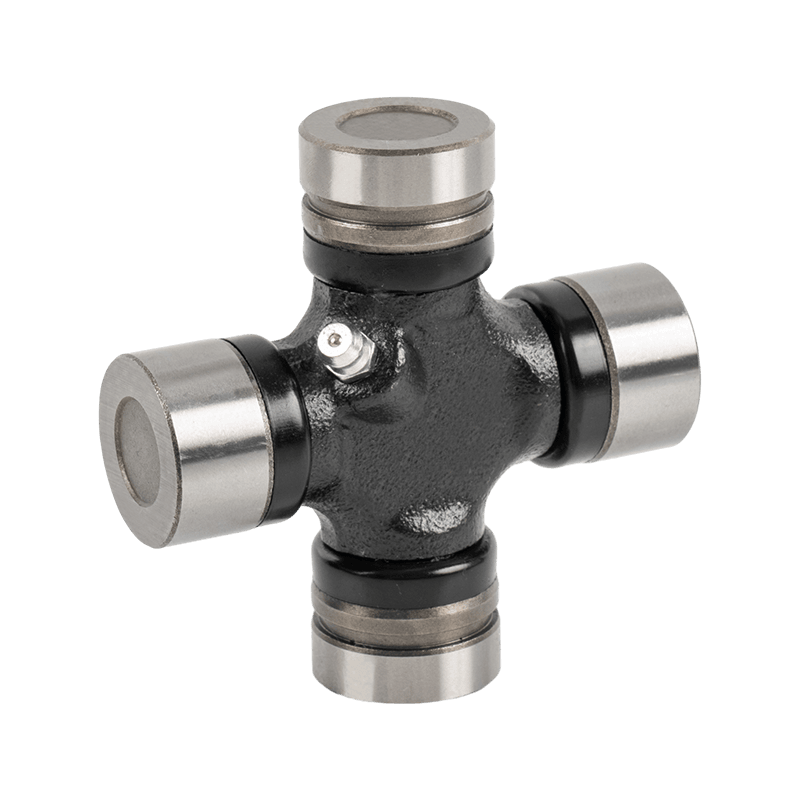
Every u-joint, whatever its retention style, is a forged cross with four hollow trunnions, each carrying needle rollers inside a hardened bearing cap. The real difference between catalog types is not the cross itself but how those caps are kept from sliding out of the yoke.
With plain round bearings, the cap is a smooth cylinder and retention comes from an external snap ring seated in a groove cut into the yoke ear — the outside-lock method. It is simple, inexpensive and easy to service with basic pliers. The grooved bearing moves that groove onto the cap: a circumferential channel is ground into the outer surface near the cap face, the yoke bore is counterbored to match, and an internal circlip snaps into the channel. Because the ring sits inside the counterbore, retention load wraps around the full circumference of the cap instead of hanging on the yoke ears.
That geometry brings two practical benefits. First, the caps resist walk-out under repeated torque reversals, which is exactly what a drive shaft experiences at every gear change. Second, the assembly can be made narrower for a given bearing diameter, since the retaining ring no longer sits outside the joint. Most grooved crosses also leave room for a grease fitting in the center of the cross, though fully sealed, non-greasable versions exist for positions that are rarely serviced.
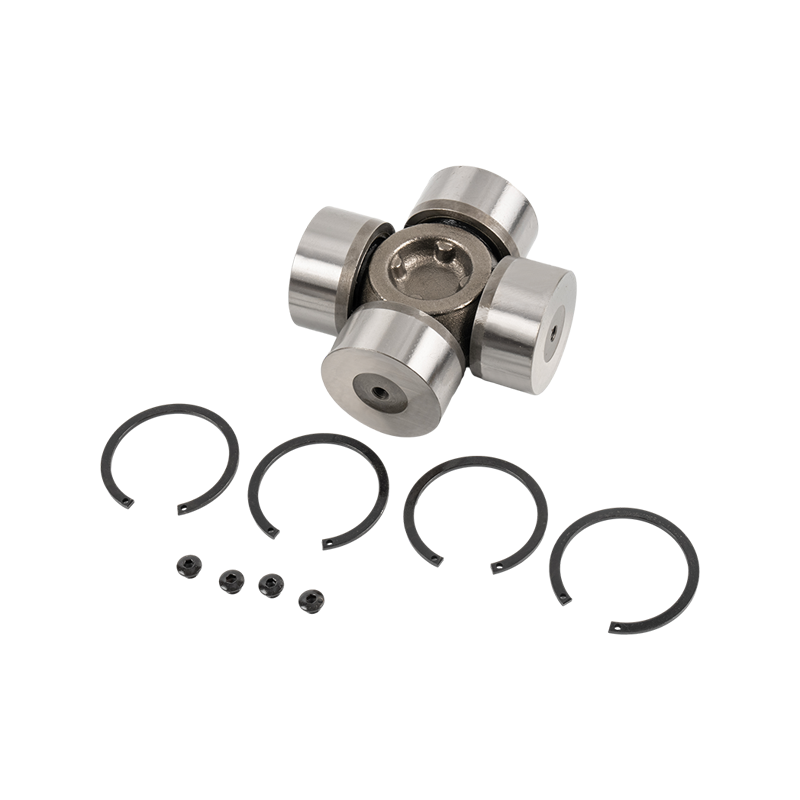
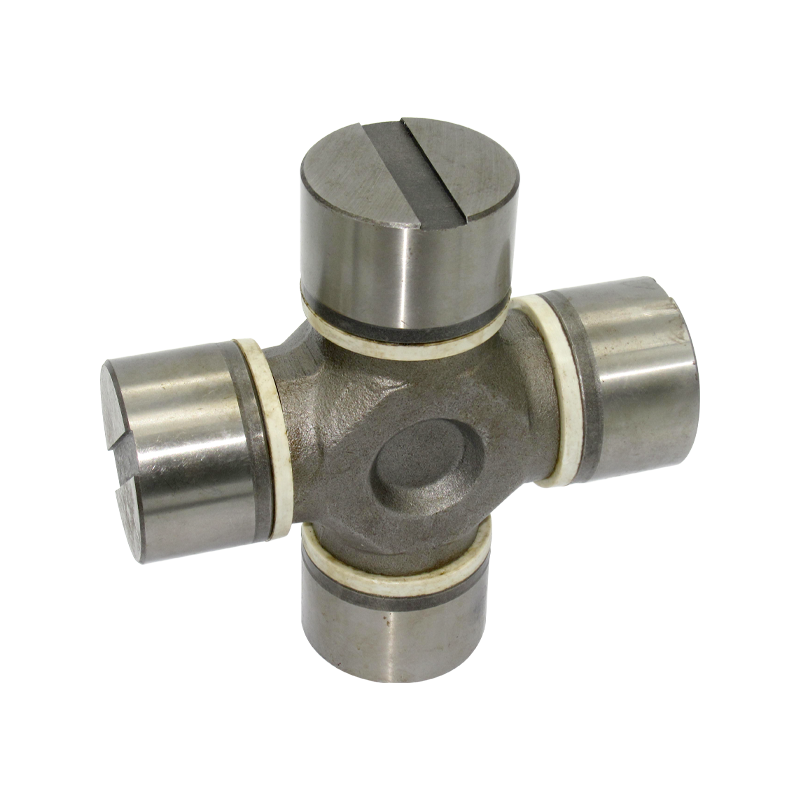
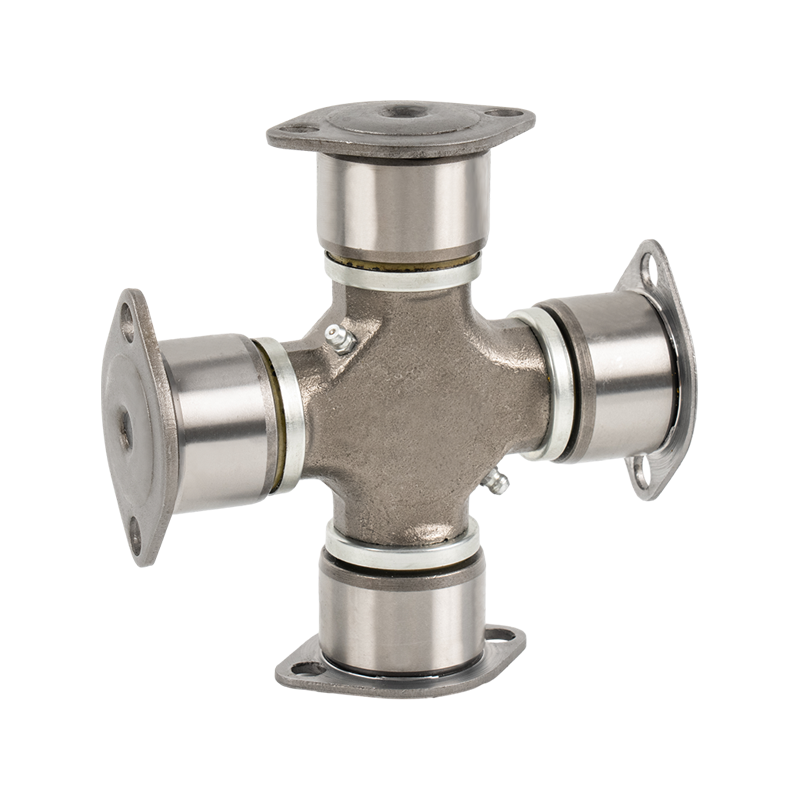
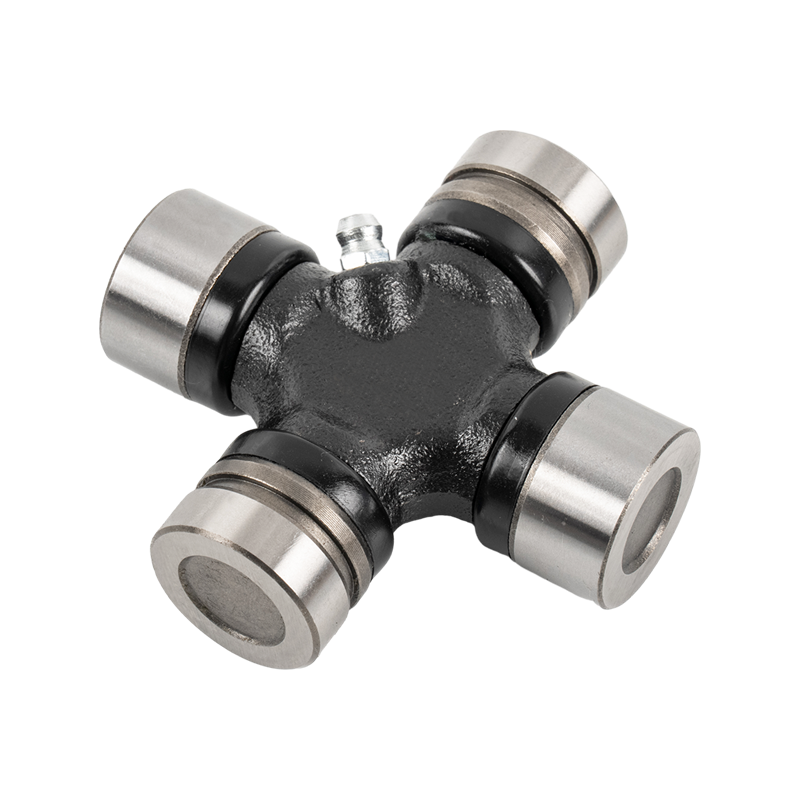
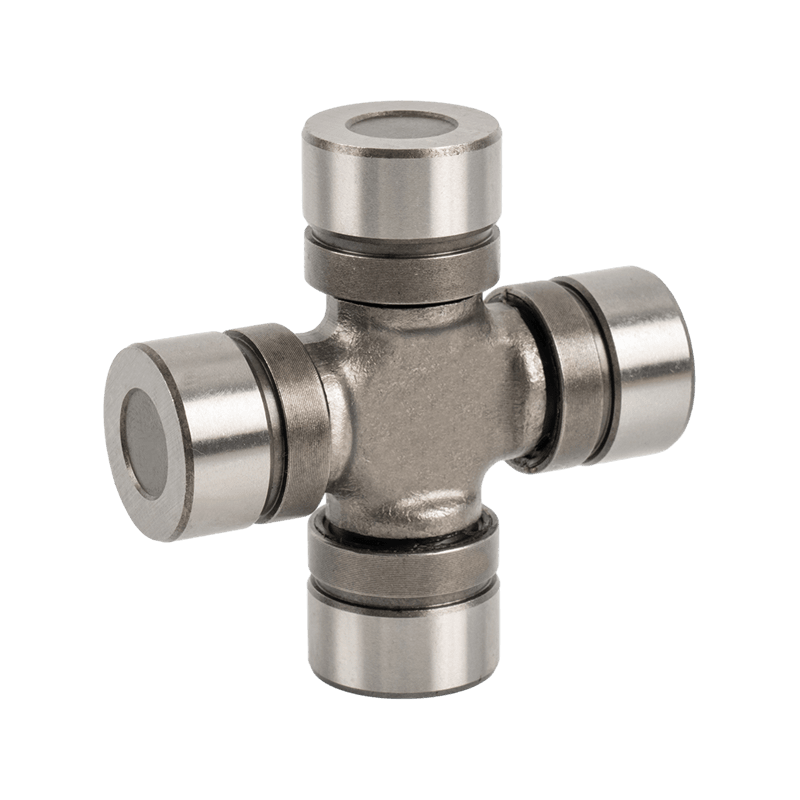 Universal Joint with Four Grooved Round BearingsThis full-grooved u-joint suits yokes with internal counterbores, retaining bearings against torque reversals in drive shafts. The article highlights its compact width and greasable cross design, making it a fit to check before comparing dimensions.View Product →
How to Measure a U-Joint With 4 Grooved Bearings
Identification takes five minutes with a caliper and prevents most wrong-part returns. Take the measurements below in this order and write them down before comparing products or prices.
| Measurement | Where to take it | Why it matters |
|---|---|---|
| Bearing cap diameter | Across the outside of one cap at its widest point | Sets the journal and needle-roller size and drives the series match |
| Lock-to-lock width | From the groove on one cap to the groove on the opposite cap | This is the span the internal C-clips bridge; the yoke counterbore spacing is machined to it |
| Overall length | Outer face to outer face with the caps fitted | Needed for clearance checks; a different, larger number than the lock width |
| Retention style | Check whether grooves sit on the caps or on the yoke ears | Grooves on the caps mean inside lock; grooves on the yoke ears mean outside lock; the two are not interchangeable |
Two cap diameters cover a large share of passenger-car and light-truck driveshafts — roughly 27 mm (about 1.063 in) and 30 mm (about 1.188 in) — while crosses for construction and agricultural machinery regularly exceed 40 mm. What the catalog does not show is tolerance: on a grooved cap, both the journal diameter and the axial position of the groove are ground to within a few hundredths of a millimeter, because the circlip must seat firmly without preloading the bearing or leaving it loose. That is where cross quality separates suppliers more than part numbers do, and it is fair to ask a prospective source how groove position is controlled during grinding.
Where the 4-Grooved Design Earns Its Keep
Heavy trucks are the anchor application. Drive shafts behind high-torque engines live through constant load reversals, and each reversal tries to walk the bearing caps out of their bores. Inside-lock retention holds the caps against that cycling far better than an external ring loaded on the yoke ear, which is why many original-equipment truck crosses specify grooved caps from the factory.
Agricultural PTO shafts form the second stronghold. When an implement strikes a stone or a plugged header, a shock spike travels down the shaft in milliseconds, and the joints at each end must absorb thousands of such events per season. Grooved-bearing crosses built for PTO duty pair the inside lock with larger journals, and many are offered in coated or stainless versions to survive fertilizer, mud and washdown. For a sense of how these are grouped by duty, the PTO series page lays out the range from conversion joints to precision sizes.
Steering columns are a quieter use case: angles are small and torque is low, but any looseness shows up immediately as play in the steering wheel, so the positive capture of an internal circlip is valued even at light duty. Industrial drive lines, marine applications and equipment such as mixers and crushers round out the list — anywhere rotation must cross an angle under sustained load.
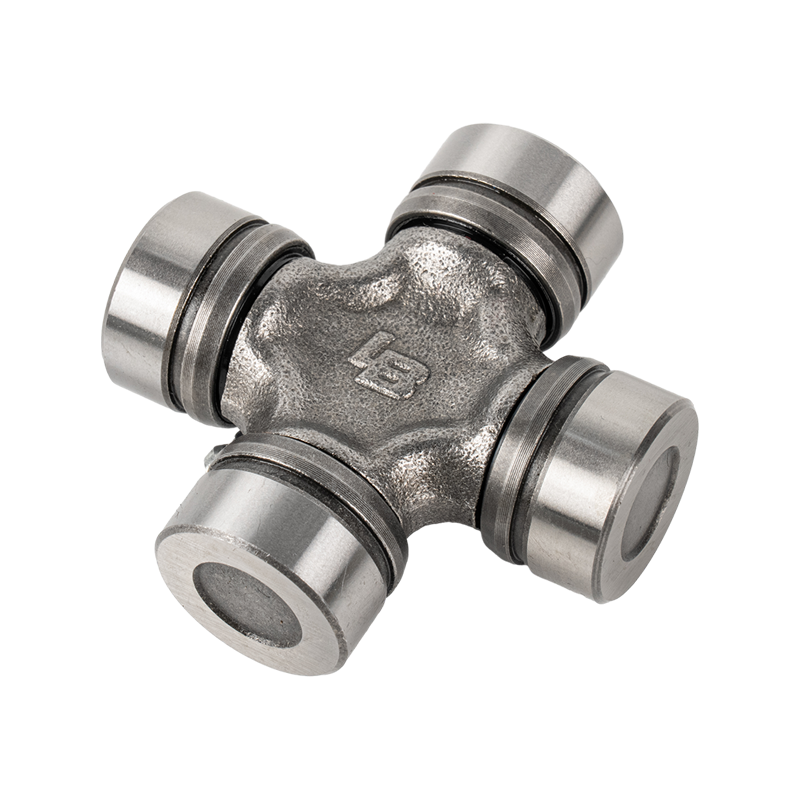
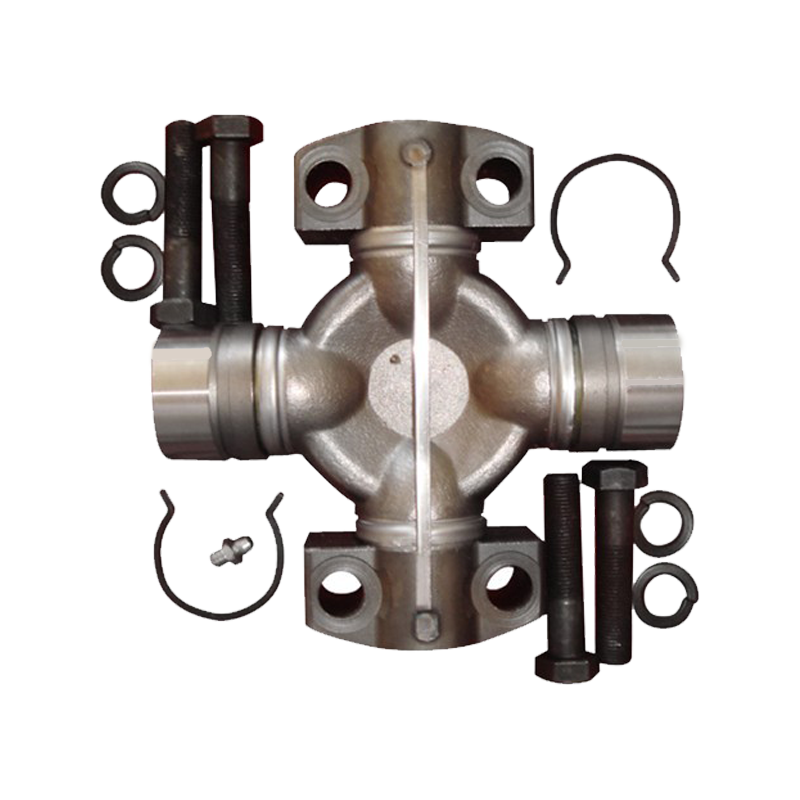
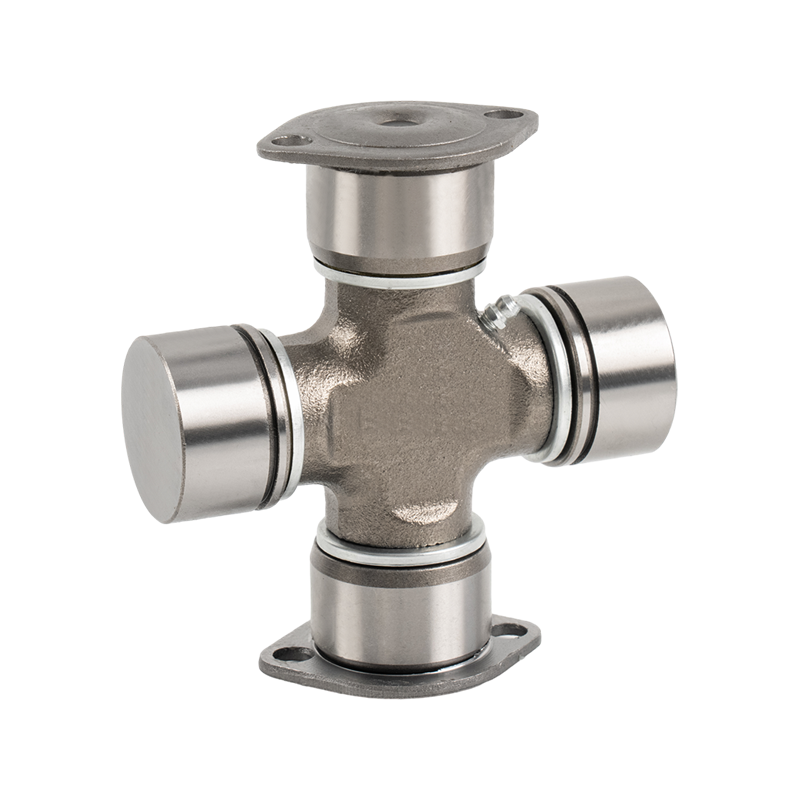
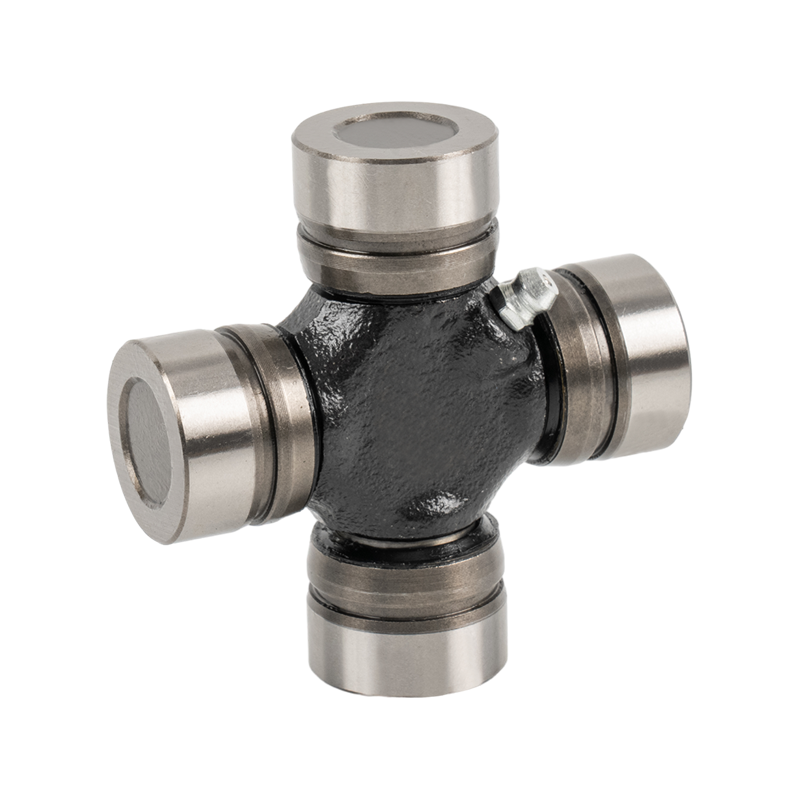 4 Grooved Round Bearings U-Joint GU7300A grooved-bearing universal joint made from alloy steel with 58-64 HRC hardness, produced under IATF 16949. The article stresses matching retention style to the yoke, so this design is worth reviewing when internal grooves call for it.View Product →
Grooved, Plain or Welded Plate: Matching the Retention to the Yoke
Retention style is not a ranking in which grooved always wins; it is a match to the yoke in front of you. If the yoke ears carry external grooves, a grooved-cap joint cannot seat, and the reverse is just as true. Four designs cover most of the aftermarket:
| Retention design | How the caps are held | Typical service |
|---|---|---|
| 4 plain round bearings | External snap rings seated in grooves machined into the yoke ears | Light and medium-duty driveshafts with the widest aftermarket coverage |
| 4 grooved bearings | Internal C-clips inside the yoke bores engaging a groove on each cap | Heavy trucks, PTO shafts and steering columns under sustained high torque |
| 2 plain and 2 grooved bearings | Mixed retention matched to yokes that combine both locking styles | Vehicle-specific repairs where one end of the joint uses each method |
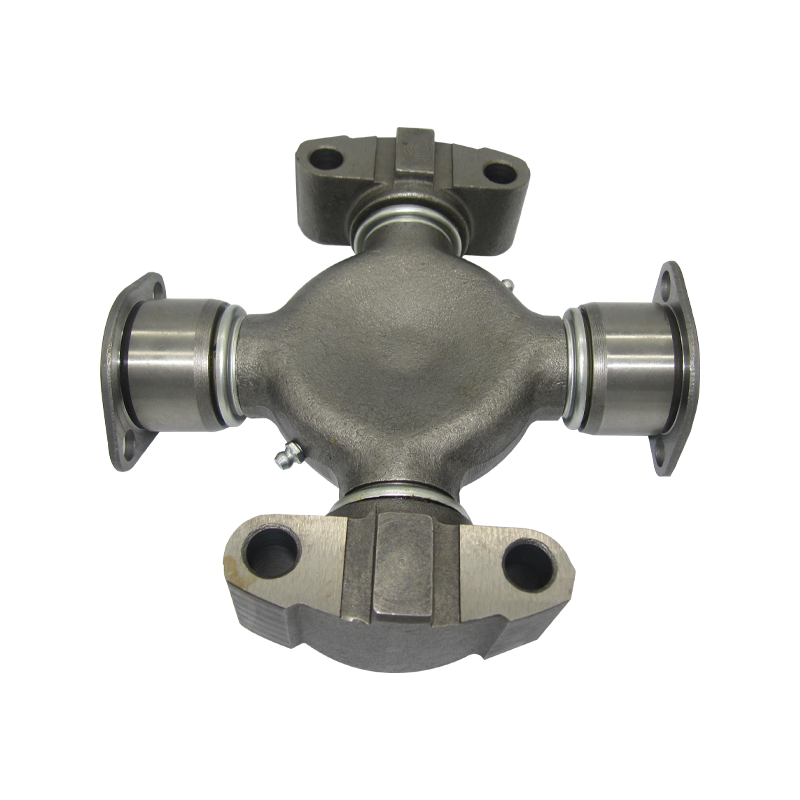
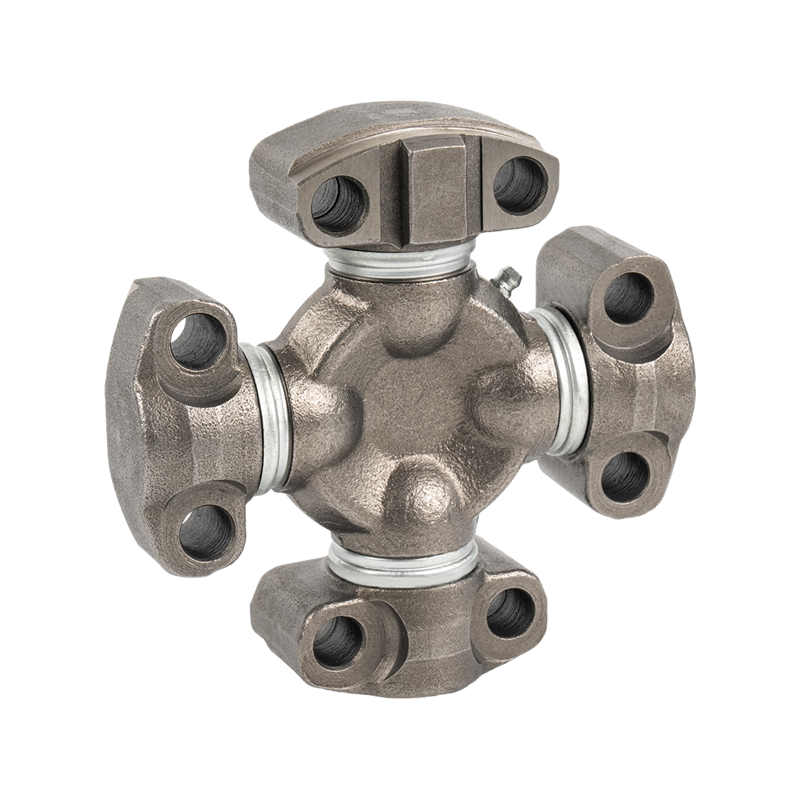
| Welded plate type | Bearing plates welded in place so no snap rings are used at all | Vibration-heavy industrial and agricultural drives where rigidity comes first |
The mixed two-plain-plus-two-grooved version deserves a special note. Some yokes are machined with external snap-ring grooves on one end and internal counterbores on the other, and neither a full-grooved nor a full-plain joint will lock correctly in that position. Fitting the hybrid layout is not a preference; it is the only configuration that retains the bearings at all.
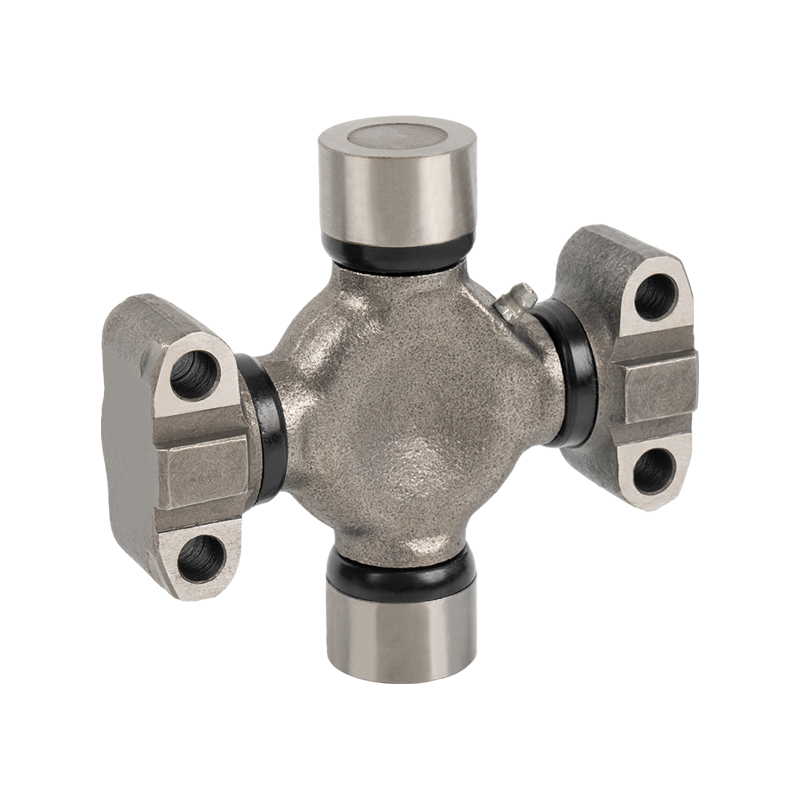
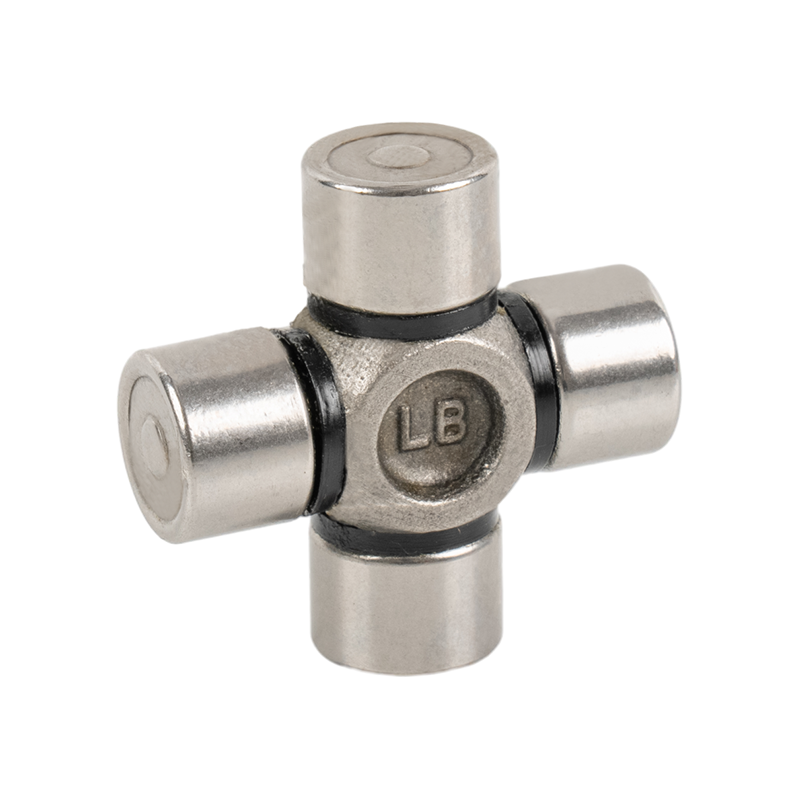
 Universal Joint with 2 Plain and 2 Grooved Round BearingsThis hybrid u-joint combines two plain and two grooved round bearings for yokes machined with external snap-ring grooves on one end and internal counterbores on the other, the only configuration the article says will retain bearings correctly there.View Product →
Procurement Checklist Before You Order
Three checks prevent nearly every wrong-part complaint: dimensions taken at the groove, retention style matched to the yoke, and a supplier who can prove consistency rather than just quote it. The list below turns that into an order-ready routine.
- Record all three measurements — cap diameter, groove-to-groove lock width and overall length — before comparing prices. Series designations only guarantee a match when the yoke is original and unmodified.
- Confirm retention style physically. Photograph the yoke ears and bores and compare them with the supplier's drawing; internal and external locks are not interchangeable.
- Choose between greasable and sealed construction. Greasable crosses with a lube fitting suit high-hours equipment on a maintenance schedule, while sealed units suit inaccessible positions but give no wear warning before failure.
- Check material and treatment. Forged alloy steel crosses with case-hardened journals and a ground finish are the baseline for grooved designs, and phosphate coating improves corrosion resistance in wet fields or winter road spray.
- For volume orders, ask for batch-consistency evidence: grinding tolerance reports, hardness certificates and quality-system registration such as IATF 16949.
- For older or specialty machines with no catalog entry, ask whether non-standard sizes can be produced from existing forging tooling; many cross manufacturers can adapt a series with minor dimensional changes.
Heat deserves a line of its own. Seal material, grease behavior and bearing clearance all shift as temperatures climb, and a joint that is dimensionally correct can still age early in a hot, high-load position. Before fixing grease type and service intervals, it is worth reading how temperature affects the performance of u-joints with 4 grooved bearings, because thermal planning is as much a purchasing decision as the part number itself.
The identification logic comes down to one habit: grooves on the caps mean inside lock, the width is measured groove to groove, and the yoke — not the catalog — decides which retention style fits. Get those three right and the 4-grooved design delivers the retention strength that made it the default on heavy trucks, PTO shafts and steering columns. When comparing sources, weigh grinding and heat-treatment capability more heavily than price lists. A producer that runs its own forging, CNC machining and grinding under a certified quality system holds groove position and journal diameter consistent across a batch, and that consistency is what keeps a fleet or a harvest moving. Since 1997, that has been the manufacturing model behind our u-joint program — annual capacity of 4.5 to 5.5 million units produced under IATF 16949:2016 — and it is the standard we would apply to any cross we bought ourselves.