

 Language
 中文简体
中文简体
U-Joint with 4 Plain Round Bearings: Design, Applications & Selection Guide
Content
- 1 How to Recognize a U-Joint with 4 Plain Round Bearings
- 2 What Does "4 Plain Round Bearings" Mean?
- 3 How 4 Plain Round Bearings Compare With Other Bearing Types
- 4 Where to Use a U-Joint with 4 Plain Round Bearings
- 5 How to Measure a U-Joint with 4 Plain Round Bearings
- 6 What to Check Before Sourcing This U-Joint
- 7 Maintenance Tips for Longer Service Life
- 8 Final Recommendation: Match the Original Bearing Design
How to Recognize a U-Joint with 4 Plain Round Bearings
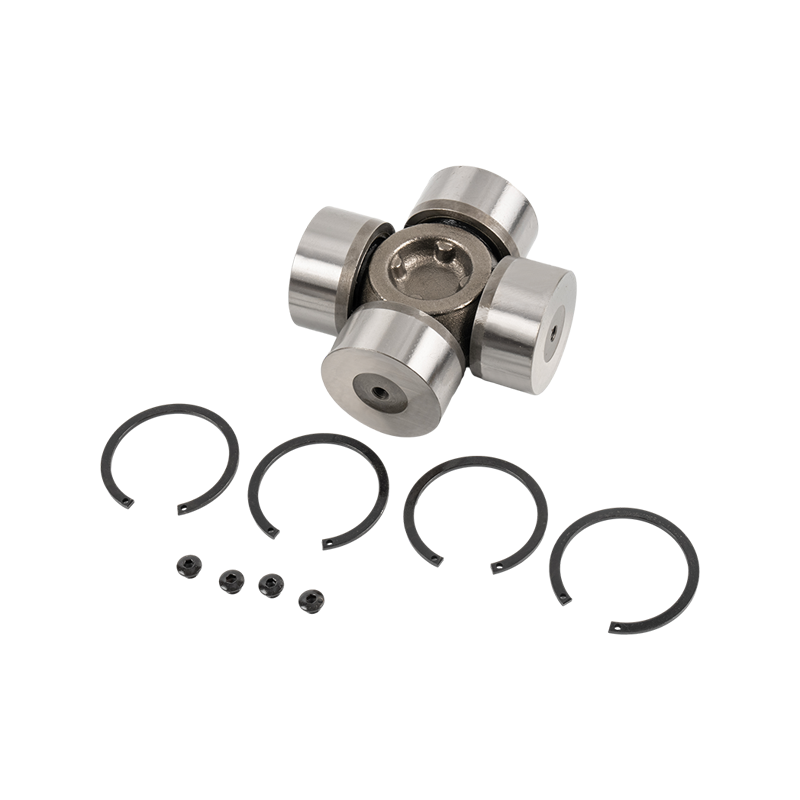
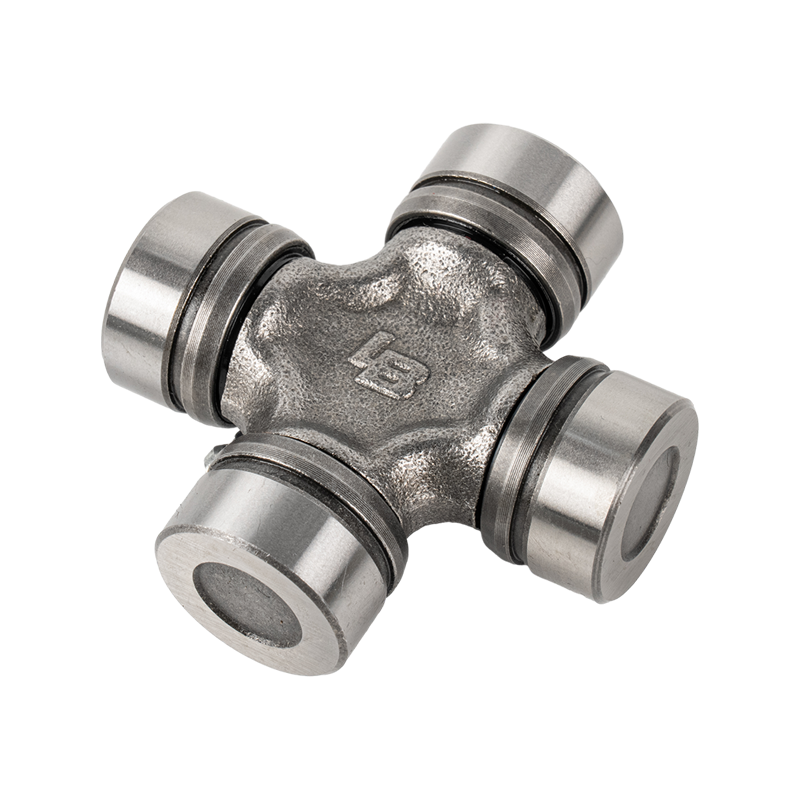
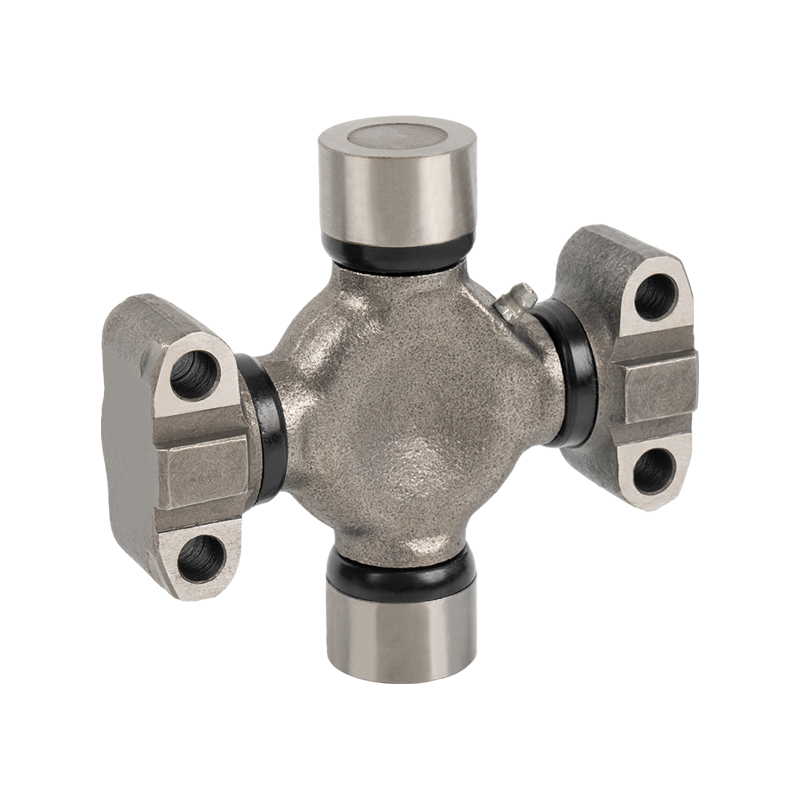
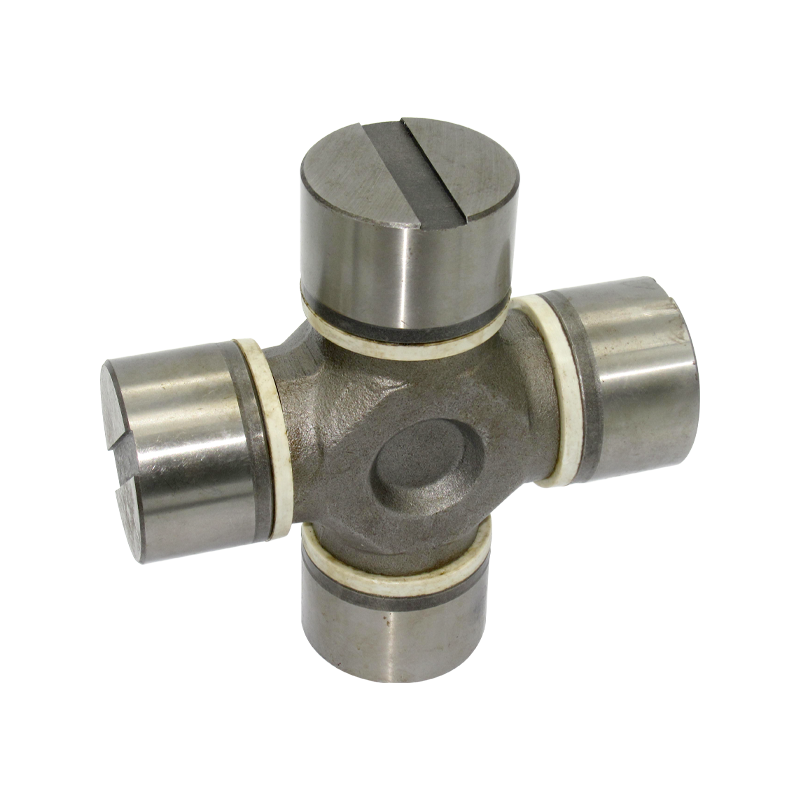
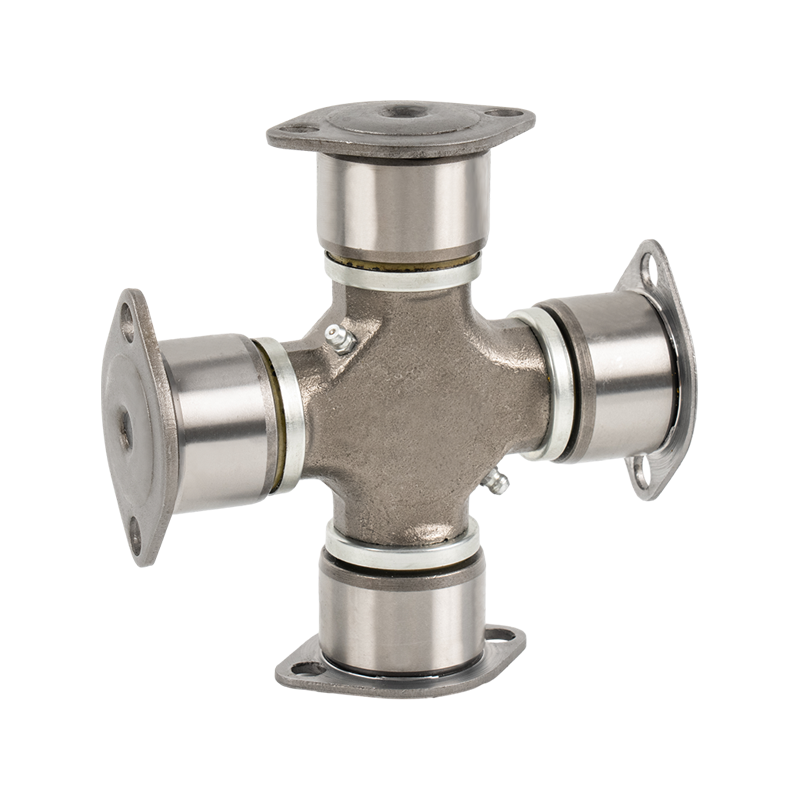
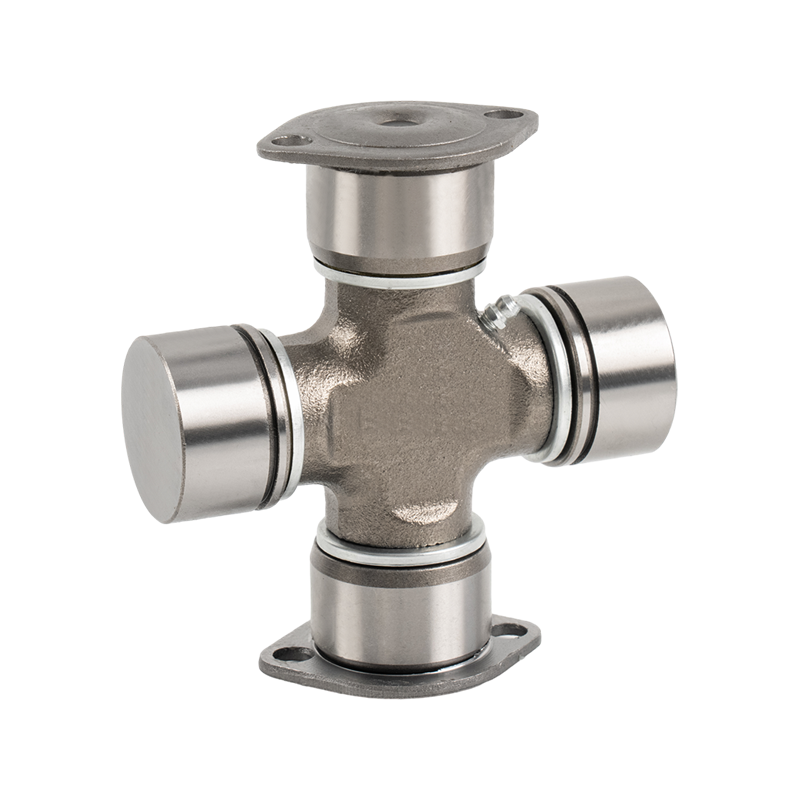
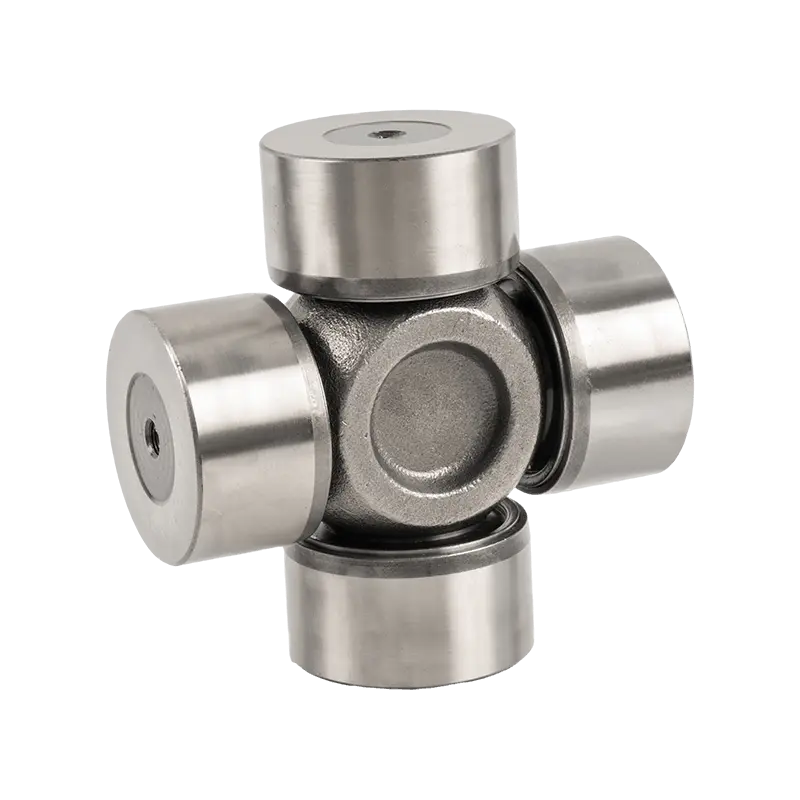
A maintenance technician pulls a driveshaft out of an older PTO-driven spreader and sees four smooth round bearing caps pressed into the cross. There are no locking grooves, no welded plates, and no wing-shaped lugs. The original part number is faint, but the bearing arrangement is clear: this is a U-joint with 4 plain round bearings.
This design is common because it is simple and predictable. Each of the four trunnions on the cross fits into a cylindrical bearing cup with a plain round bore. The cups are held in place by snap rings, pressed yokes, or end plates, and they allow the joint to transmit torque while the shafts operate at an angle. If your application uses one half-round yoke and one full-round yoke, or a standard driveline with cap retention, this is often the most economical and direct replacement.
At the manufacturing level, this configuration is a core product category rather than an afterthought. You can review the U-joint with 4 plain round bearings product line to see how the design is translated into production specifications.
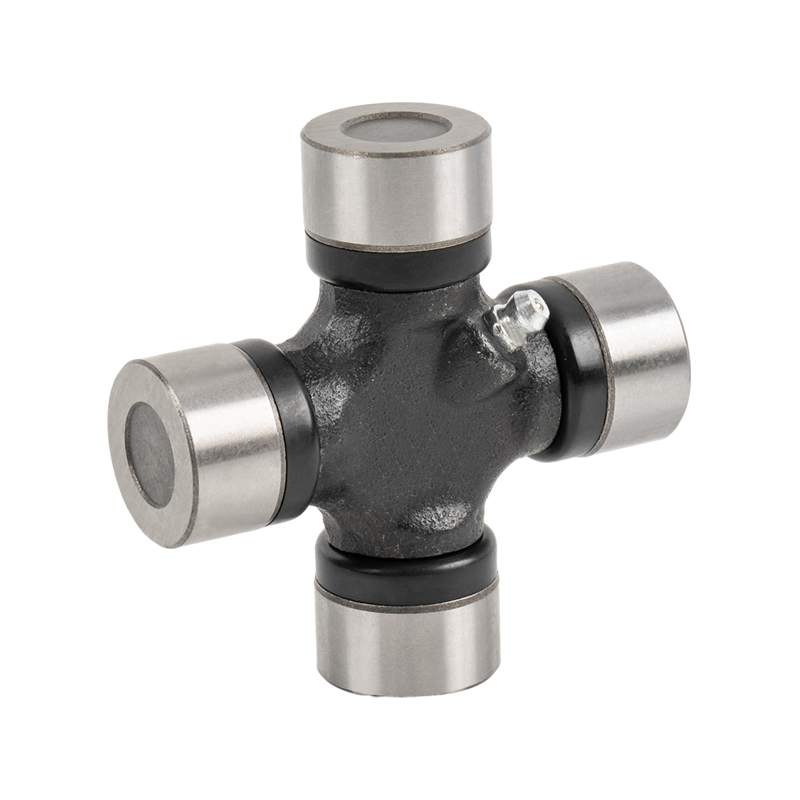 China U-JOINT WITH 4 PLAIN ROUND BEARINGS Suppliers, Manufacturers - Zhejiang WAs China U-JOINT WITH 4 PLAIN ROUND BEARINGS manufacturers and U-JOINT WITH 4 PLAIN ROUND BEARINGS suppliers, Zhejiang Weigang Technolog...View Product →
What Does "4 Plain Round Bearings" Mean?
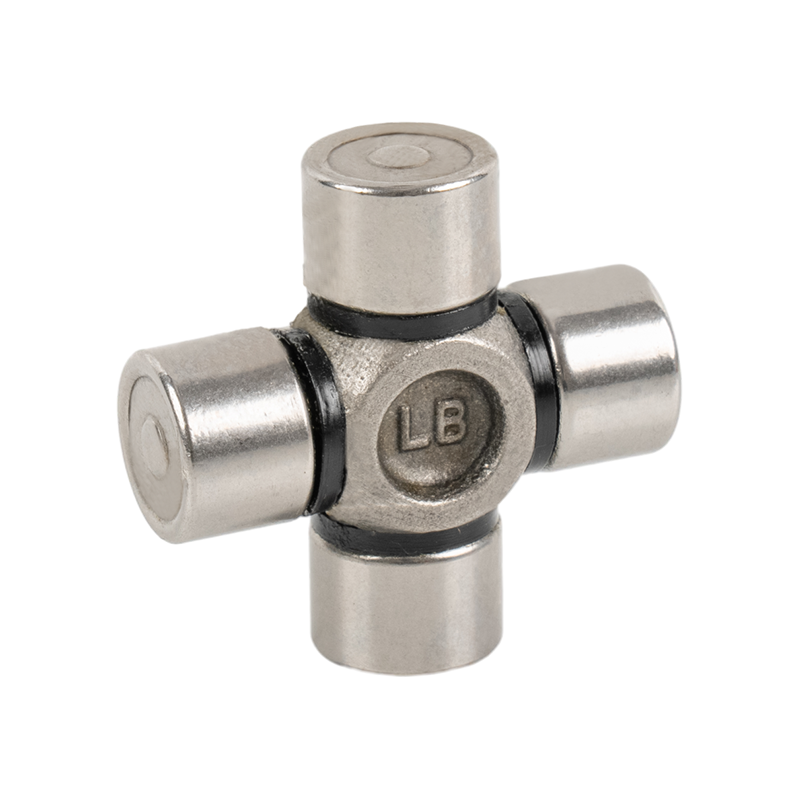
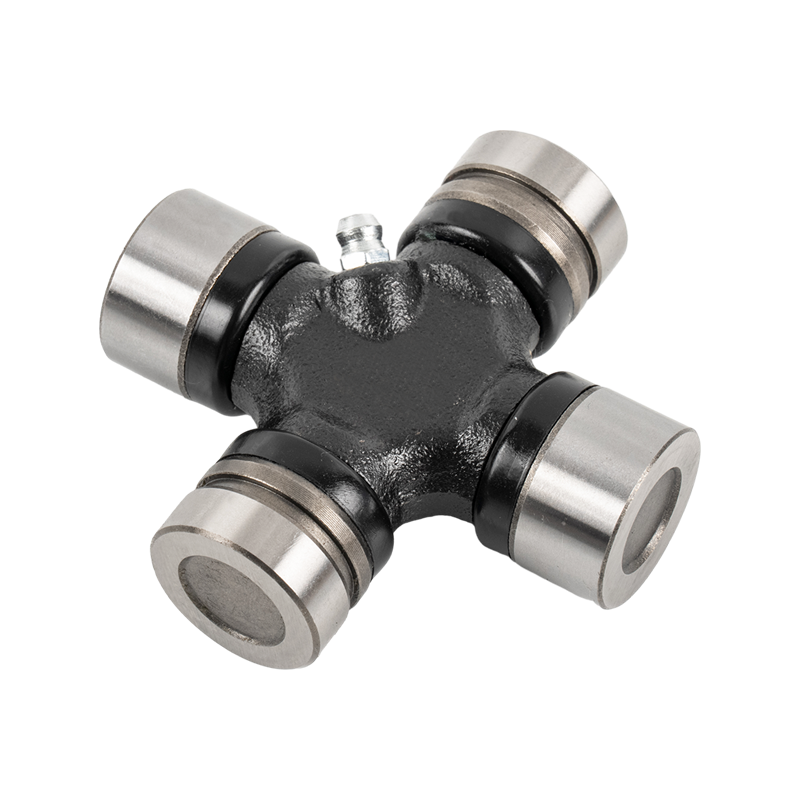
The name refers to the bearing cups that sit on the four arms of a universal joint cross. Each cup has a precision-ground cylindrical bore, and the cross trunnion rotates inside a set of needle rollers. "Plain round" means the outer surface of the cup is smooth and cylindrical, without the grooves or wing features used in other universal joint designs. The simplicity of the shape makes it easy to machine, inspect, and fit.
Cross and Bearing Cup Construction
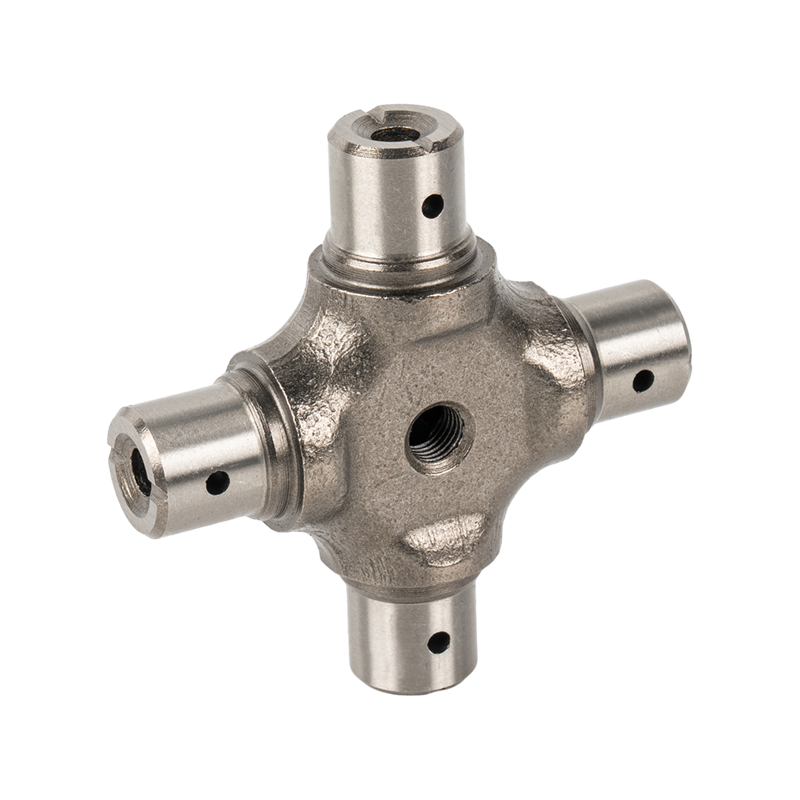
The cross, also called a spider, is typically forged from alloy steel and then precision-ground on the trunnion diameters. The bearing cups are hardened and ground to hold the needle rollers. In a 4 plain round bearing arrangement, all four cups use the same basic geometry. This symmetry helps keep replacement parts predictable and reduces the risk of installing a cup in the wrong position.
How the Bearings Are Retained
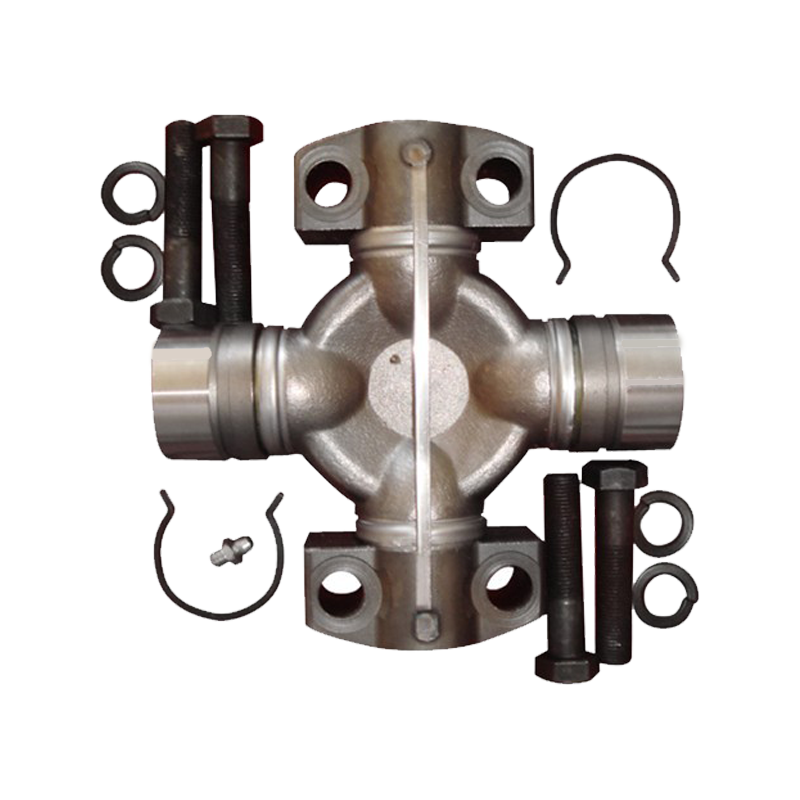
Retention is what separates one bearing style from another. With plain round bearings, the most common retention methods are internal snap rings, external snap rings, pressed-in caps, or bolted end plates. Some applications use a half-round yoke on one side and a full-round yoke on the other, which is why you must check the yoke type before ordering. If the retaining groove sits inside the yoke bore, the joint is designed for snap-ring retention; if there is no groove, the joint may rely on a pressed fit or a plate.
The absence of grooves or welds also makes installation more forgiving for shops that replace U-joints in the field. A small dial caliper and a standard snap-ring tool are usually enough to complete the job.
How 4 Plain Round Bearings Compare With Other Bearing Types
When you search for a replacement universal joint, the bearing style matters more than the overall shape of the joint. Four plain round bearings are not interchangeable with grooved, welded plate, or wing-style joints. Each style has a different retention and load path.
| Bearing Style | Retention Method | Typical Applications | Service Notes |
|---|---|---|---|
| 4 Plain Round Bearings | Snap rings, pressed cups, or end plates | PTO shafts, light-to-medium drivelines, general industrial | Simple to install, easy to measure, widely available |
| 4 Grooved Bearings | Locking grooves machined into the bearing bore | Heavy truck drivelines, steering joints | Stronger axial retention, needs precise groove alignment |
| 2 Plain + 2 Grooved | Mixed retention on opposite trunnions | OE-specific driveline and steering applications | Less common, requires exact orientation |
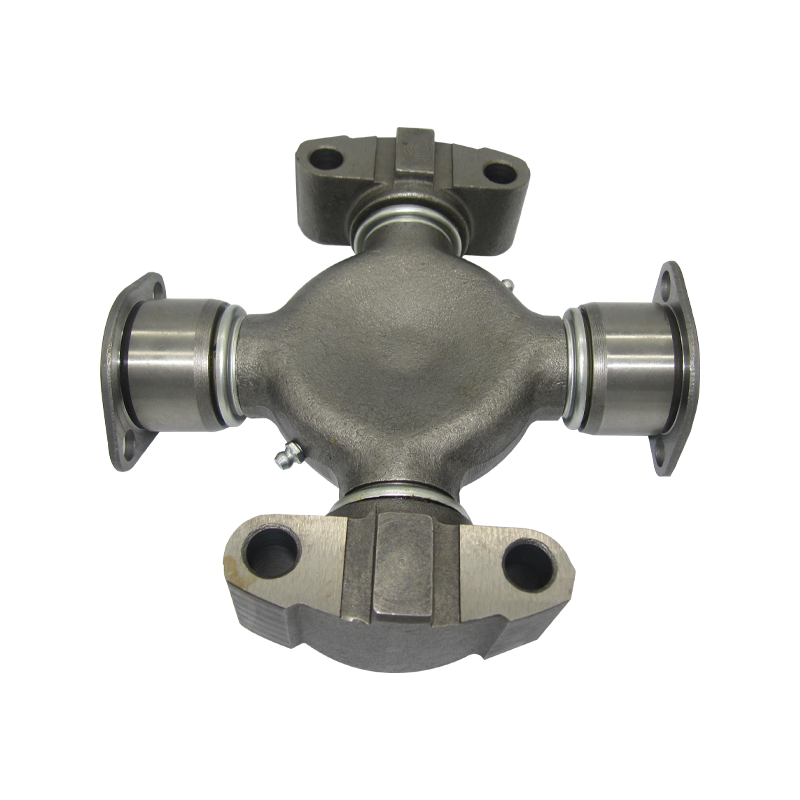
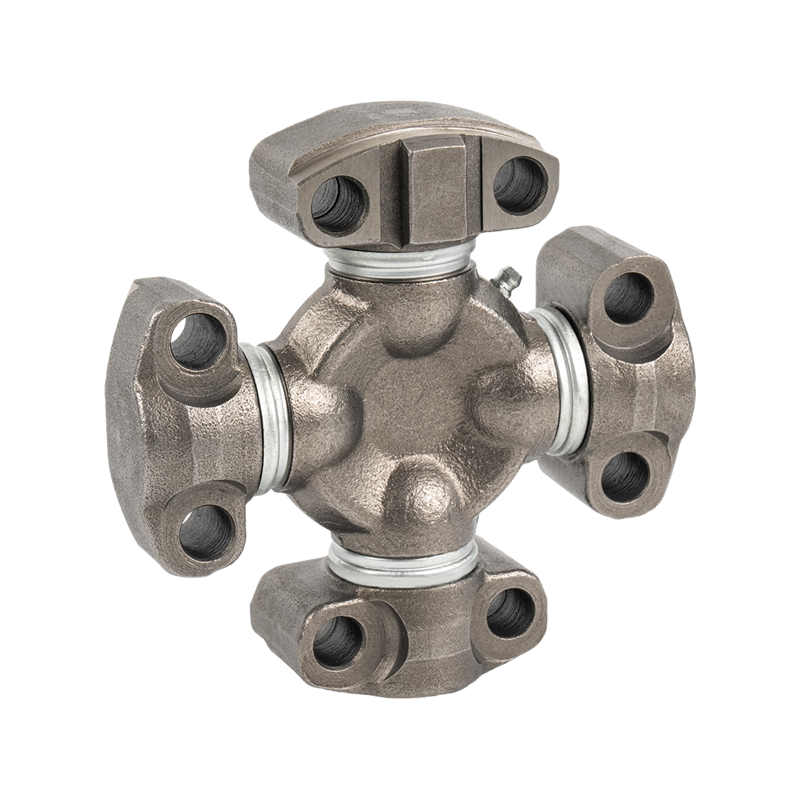
| Welded Plate Type | Welded plates around the bearing cups | Agricultural equipment and heavy implement shafts | Very robust, more difficult to service |
| Wings Bearing Type | Wing-shaped lugs that lock into the yoke | High-angle or high-torque specialty applications | Dimensional fit is critical |
If you are replacing a failed joint, the safest starting point is to identify the bearing retention system before measuring anything else. A 4 plain round bearings joint gives you the simplest installation path, but only if the yoke bores and retainer grooves match the cup dimensions.
Where to Use a U-Joint with 4 Plain Round Bearings
This bearing style appears across many driveline categories because it does not require expensive lock rings or welded assembly. It is especially common on agricultural PTO shafts, light commercial vehicle driveshafts, and many industrial power transmission applications.
Agricultural and PTO Drivelines
On a tractor PTO shaft, the U-joint is constantly exposed to dirt, moisture, and shock loads. The 4 plain round bearing design works well there because snap-ring retention allows fast replacement without specialized welding equipment. Many agricultural PTO drive shafts use this joint style, particularly when the driveline is designed with a removable yoke.
Construction and On-Highway Equipment
Commercial vehicles and construction equipment also use this configuration when the OE specification calls for standard bearing cups. The same round cap geometry is easy to source through aftermarket supply chains. If you are maintaining a loader, backhoe, or truck driveline, you can compare the bearing lockup detail with our construction equipment driveline components section to see how the style is applied across different machine categories.
When Another Bearing Style Is Better
There are cases where 4 plain round bearings are not the ideal choice. If the original joint uses grooved bearings to prevent axial movement under severe torque reversals, replacing it with plain round cups may lead to premature wear. Similarly, welded plate designs should not be switched to snap-ring retention if the yoke bore lacks the necessary groove. Always confirm the original design before purchasing.
How to Measure a U-Joint with 4 Plain Round Bearings
Before placing an order, measure the old joint in millimeters or inches, whichever matches the existing part. The most reliable method is to measure the bearing cap diameter, the snap-ring groove location, and the overall cross width. Use a caliper with a depth rod and a standard set of snap-ring pliers during the process.
- Measure the diameter of one bearing cup with a digital caliper. Take two readings at 90 degrees and use the average.
- Measure the distance across the outside of the two opposite bearing cups to determine the overall joint width.
- If the joint uses snap rings, measure the diameter of the retaining groove and its distance from the cup face.
- Check the inside diameter of the yoke bores; the bearing cups must fit without excessive play or forced hammering.
- Confirm the yoke style: full-round yoke, half-round yoke, or combination, because the replacement joint must match the original lockup.
Checking Part Numbers and Cross-References
Many replacement joints carry a stamped or etched number on the cross. That number may correspond to an OEM reference or a standard series code. Use the dimensions first, then the reference number, because the same series code can appear on joints with different retainer styles. Our step-by-step U-joint measuring guide explains how to use a caliper correctly and avoid the most common measurement errors.
Orientation and Lubrication Holes
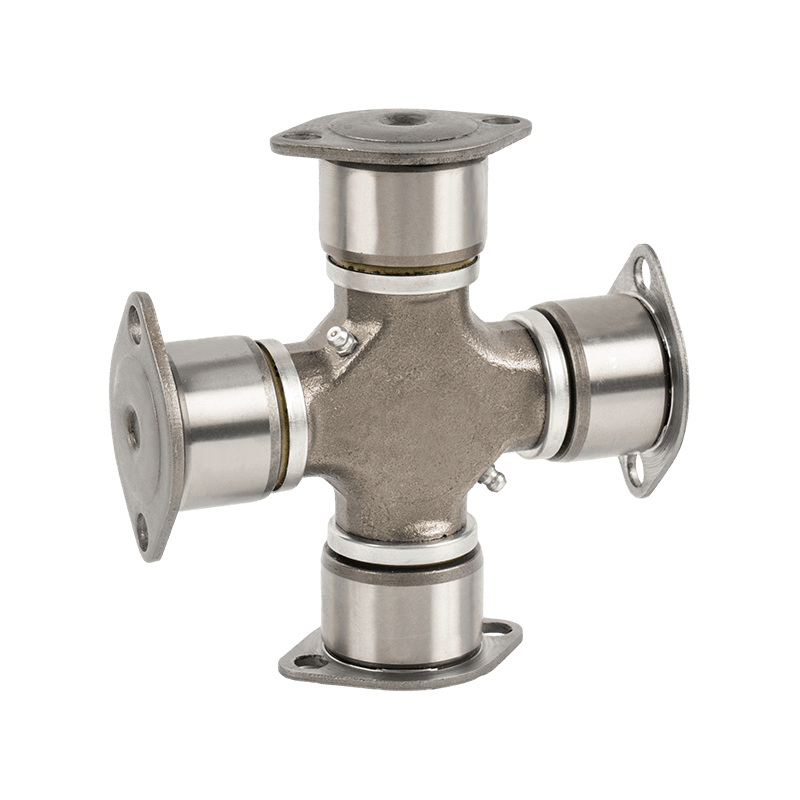
Some crosses come with a grease fitting on one trunnion and a drilled lubrication passage through the centre. If the original joint has a threaded grease fitting, check whether the replacement has the same thread type and whether the fitting points toward the accessible side of the yoke. This detail is easy to overlook but it affects long-term maintenance.
What to Check Before Sourcing This U-Joint
Not all plain round bearing U-joints are equal. The differences show up in material choice, heat treatment, journal finish, and seal quality. A low-cost joint may look identical in a catalogue but fail much faster in a dusty PTO application.
Material and Heat Treatment
The cross should be forged from hardened alloy steel, and the trunnions should be ground to a consistent finish. The bearing cups need a hardened inner race surface and a precise needle complement. If the manufacturer does not publish hardness data or a heat-treatment process, ask for it. The difference is visible in wear patterns under heavy torque: a well-treated joint develops a polished surface, while an untreated one starts to fret and gall.
Supplier Qualification
Look for a supplier that has documented quality systems and in-house machining capability. A manufacturer with IATF 16949 certification, CNC turning, grinding lines, and assembly lines can control the tolerances that keep a replacement U-joint reliable. At scale, this means multiple forging lines and an annual output of millions of universal joints. Our 4 plain round bearings U-joint options are produced under this kind of control, with forged crosses and finished bearing cups designed for consistent fit.
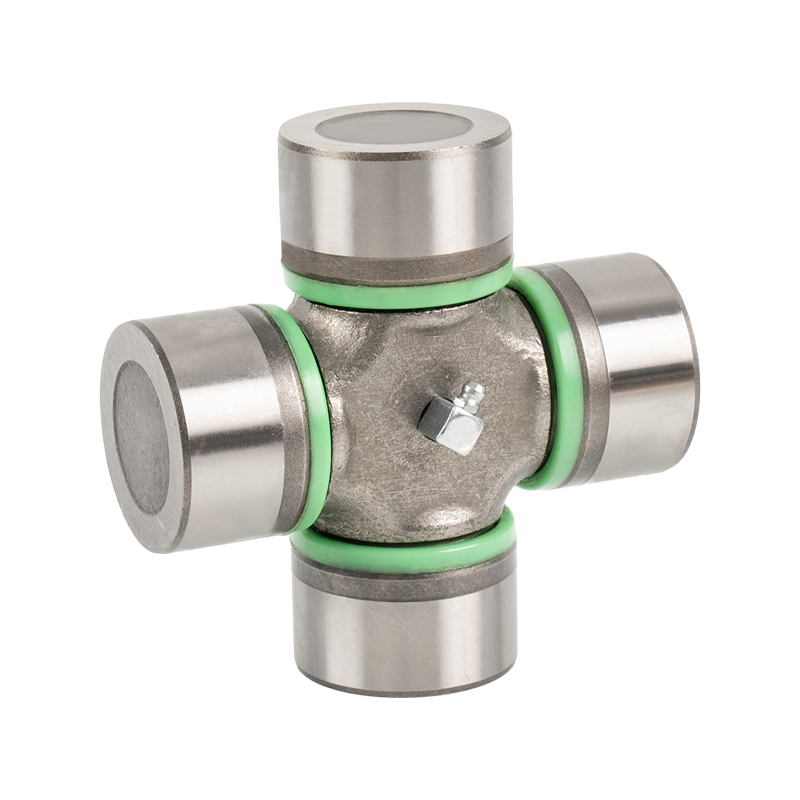 China 4 Plain Round Bearings U-Joint Suppliers, Manufacturers - Zhejiang WeiganAs China 4 Plain Round Bearings U-Joint manufacturers and 4 Plain Round Bearings U-Jointsuppliers, Zhejiang Weigang Technology Co., Ltd...View Product →
Seals and Lubrication
Seals are often the first thing to fail on a U-joint. A well-designed seal keeps grease in and water or abrasive dust out. If the joint is used in a severe environment, verify that the seal is a multi-lip design rather than a simple stamped cover. Also confirm whether the joint is pre-greased and whether a grease fitting is included.
Maintenance Tips for Longer Service Life
With plain round bearing U-joints, maintenance is relatively straightforward, but it still requires discipline. Most early failures come from missing lubrication, incorrect installation, or damaged seals.
Lubrication and Greasing
If the joint has a grease fitting, use a hand grease gun and pump slowly until fresh grease exits from the seals. Do not over-grease with a high-pressure gun, because that can blow out the seal. For sealed, maintenance-free joints, do not attempt to force grease into a fitting that is not present.
Inspection Signs You Should Not Ignore
- Clicking or squeaking when the shaft rotates under load, especially at low speed.
- Slight radial play between the cross trunnion and the cup after the joint has been greased.
- Rust or pitting on the exposed face of the bearing cups.
- Discoloration or heat marks near the retaining rings.
If any of these signs appear, replace the whole joint rather than just the cups or seals. The cross and cups are machined as a matched set, and mixing old and new parts leads to uneven load distribution.
Final Recommendation: Match the Original Bearing Design
The U-joint with 4 plain round bearings is a proven design that remains popular because it balances cost, availability, and serviceability. For most standard driveline repairs, it is the fastest route back to work. But the only reliable way to choose it is to confirm the cross dimensions, cup diameter, retention method, and yoke style. When you do that, you avoid the mismatch problems that cause vibration, rapid wear, and failed replacements.
If you already know your shaft size and yoke type, compare your requirements against the available 4 plain round bearing designs. Matching the original bearing configuration is the most direct way to keep the driveline quiet, strong, and predictable.